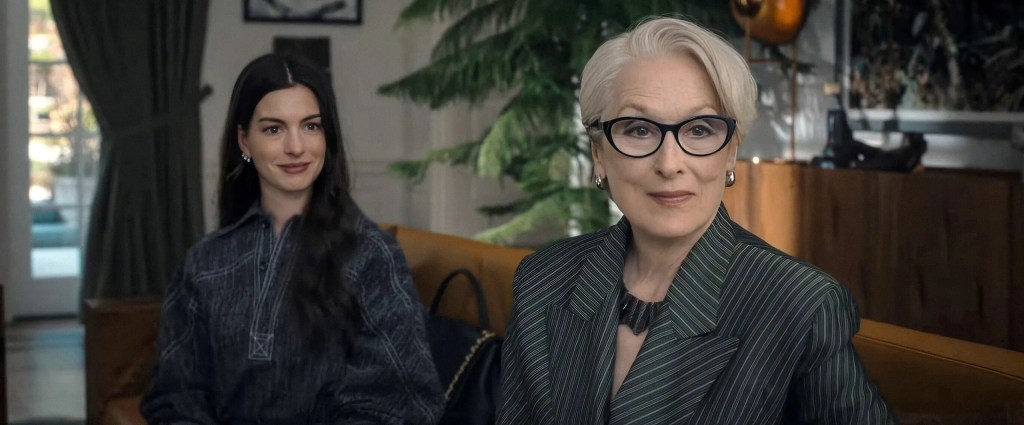
Too often we have seen long-awaited sequels of beloved movies crash and burn before our screening is well underway. But that is not the case with The Devil Wears Prada 2. It may not match the original movie released twenty years ago, but it is worth the watch and a good experience.
The problem with delayed sequels is the expectation to match the original movie that won everyone’s hearts. The trouble is also with the story: many times, we are left wondering why the sequel was even made, especially if the original had a perfect resolution (this was the case when I screened Gladiator II). Cynicism grows when we realize that the sequel was just an excuse to see beloved characters again.
Fortunately, this is not always the case. Sometimes a sequel can satisfy high expectations. Not only do we get a fresh look at the people associated with Runway, but the movie is topical and an appropriate commentary on the current media landscape and the future with tech and AI.
For anyone who fell in love with the original movie back in 2006, there is much to appreciate, here. Not only is the cast 100% identical, but so is the crew. David Frankel returns to direct, in addition to screenwriter Aline Brosh McKenna, producer Wendy Finerman, cinematographer Florian Ballhaus, and an original soundtrack by Theodore Shapiro. Their work helps remind us that the test of a good sequel is not limited to the reprisal of beloved characters, but the overall “feel” of the original movie. The final product is easy to follow along and does not require additional contemplation for appreciation.
Anne Hathaway rocks in her return as Andy Sachs, the relatable protagonist who was previously thrown into the unfamiliar world of fashion. I would consider Andy to be a flat character this time around (as her arc was fulfilled in the original movie) but she is the one who moves everybody else. Stanley Tucci reminds us why he is a treasure with his return as Nigel Kipling, giving the impression of an old friend you are always happy to see again. And Emily Blunt’s return as the snappy Emily Charlton, who is now a senior executive at Dior, must also be commended.
I would say what distinguishes the sequel from the original is the title character, herself: Miranda Priestly. The audience will realize Miranda’s quips do not sting as powerfully as they did twenty years ago due to the evolution of workplace environments (even someone with her clout can’t get away with every insult nowadays). Miranda is far more vulnerable than she was when we first met her due to changes in the media landscape putting the future of Runway (no longer a magazine, but a brand) in jeopardy. We do delight in seeing Miranda navigate outside her ivory tower among the common people, but we also sympathize with her. In the original it was confined to one scene as she shares her coming divorce with Andy, but this time it drives her character throughout the movie. Miranda questions the future of fashion with the possibility of an AI takeover being pushed by an obnoxious and nihilistic tech figure (played exceptionally by Justin Theroux) who brashly dismisses the artistic human achievements throughout history as something a computer can do within seconds. This humanizes her far beyond a divorce, which had her thinking just about her own world. Now she must think about the world, itself.
While this may not match the original Devil Wears Prada, it remains a good movie and is worth watching again in the future (maybe even for an ambitious double-feature day combined with the original). While most long-awaited sequels crash and burn, that is thankfully not the case with The Devil Wears Prada 2.

