97th Academy Awards: DID NOT CARE

As a high school senior, I was filled with ambition and dreams about entering the film industry and possibly soaring to success by winning an Oscar (or more). But as I drink my coffee and watch the sunrise through my peripherals on the morning after the 97th Academy Awards, I can write that I did not watch even ten minutes of last night’s ceremony. In fact, as I drifted off to sleep at an hour that would have shocked my younger self, aware that I was missing updates on who took home the highest honors on Hollywood’s most celebrated night, I simply said to myself: “I don’t care.”

I think I reached this state of mind leading up to last night because I had no interest in the nominees. 2023 was an exciting time for movies with the Barbenheimer phenomenon. And beyond the movies, the Oscars were entertaining with Ryan Gosling performing “I’m Just Ken” and John Mulaney comedically recapping the plot of Field of Dreams instead of reading the teleprompter for the category he was presenting. But even with the movies that I did watch (A Complete Unknown, Wicked, Nosferatu, etc.) I could not motivate myself to watch the additional nominees (such as The Brutalist for its 214 minute runtime and Emilia Pérez being the target of online trolls). My devotion to the host, Conan O’Brien, was the only incentive to watch the ceremony. Expecting the show to start momentarily at 8PM, I was shocked to learn it had already begun at 7. Knowing that I had missed more than half an hour, I decided to simply catch the recaps on YouTube in the morning.

But overall, I believe this was the result of learning the in’s and out’s of the entertainment industry; not just by getting involved in media production over the years, but listening to the podcast Armchair Expert as A-listers recount their experiences of the procedures to being booked as guests on Letterman. How many celebrities have shared that they quickly learned money and fame did not give them lasting happiness? There are also the numerous celebrity encounters I have had while working in the hotel industry. When you see actors standing in front of you that you grew up watching, they are no longer two-dimensional and elevated on a big screen. They were often shorter than me, so I would be looking down at them. And, above all, I learned that privacy for a celebrity is akin to water in a desert. I believe the best way to describe this is that the veil of fame had been torn. Celebrities are not glamorous and wealthy as they appear in paparazzi shots or Access Hollywood or on the red carpet. They are working people just like us, but the cameras are always following them because we are interested in them.

In my youth, my goal was to win an Oscar simply because it could vindicate me while I held onto what was left of the popularity contest mentality. Being socially awkward is incredibly difficult at a young age when you and your peers share a cutthroat mentality about being cool. Knowing that I was creative and a talented writer, I believed that “making it” as a filmmaker would be what remedied my insecurities and would actually allow me to get back at those who were not respectful towards me. It turns out I did not need fame and accomplishments to get their respect. Life did that for me.

I also previously wrote in 2020 how I came to determine that the Oscars were not the ultimate metric on good or bad movies. I have often pointed out that, while Best Picture winners have included Casablanca, Lawrence of Arabia, Amadeus, and Schindler’s List; Citizen Kane was famously snubbed and Martin Scorsese’s only win came with The Departed, not with his signature masterpieces GoodFellas, Raging Bull, or Taxi Driver. In recent years, Steven Spielberg lamented that Christopher Nolan’s iconic 2008 Batman film, The Dark Knight, was not considered worthy of a Best Picture nomination because it was an adaptation of a comic book and a box office success. Spielberg even noted that we have a social need to be together, and movies truly are a way to accomplish that. There has always been “Oscar Bait” that has been rooted in a prude mentality that only dry period dramas are worthy of being considered the better movies because the public cannot appreciate them. I was beyond exhilarated at the age of 13 when The Lord of the Rings: The Return of the King took home the Best Picture Oscar (the only fantasy film to do so until The Shape of Water received the top prize at the 90th Academy Awards), and over the years I have had to pinch myself as a reminder that an action fantasy movie could really be considered the best movie of the year. When overwhelmingly popular movies are worthily nominated at the Academy Awards, it feels like something worthy of keeping up with, as if it were sports playoffs.

But I cannot simply write off the Oscars as a whole simply because the nominees were nothing to be excited about… at least in my opinion at this moment. Simply put: some seasons have smaller harvests. Perhaps in the coming years we will have more award seasons to look forward to?

This year, I hope to catch a new movie every week in an effort to be properly caught up when award season comes around. I at least know I have one date set on my calendar: July 17, 2026, when Christopher Nolan releases his adaptation of The Odyssey by Homer. I certainly think that a year and four months is enough time to re-read the blind bard’s epic before the names Odysseus, Telemachus, and Polyphemus are being referenced left and right.
CONCLAVE

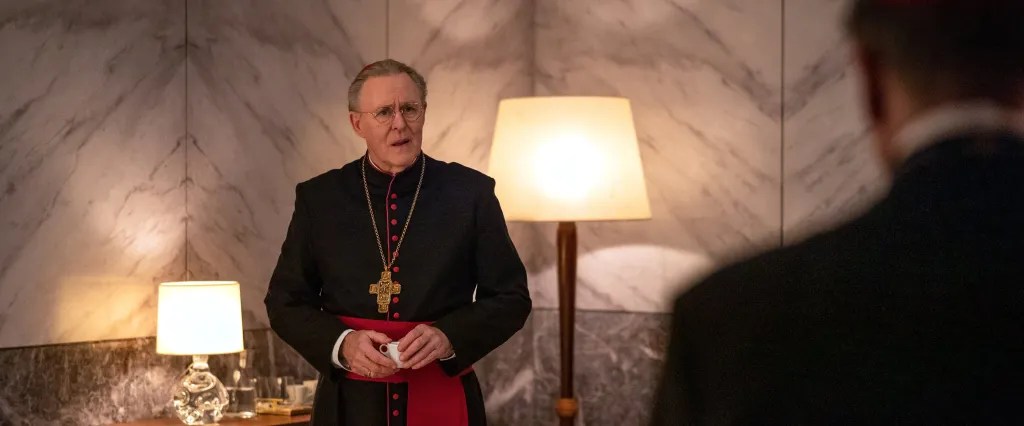
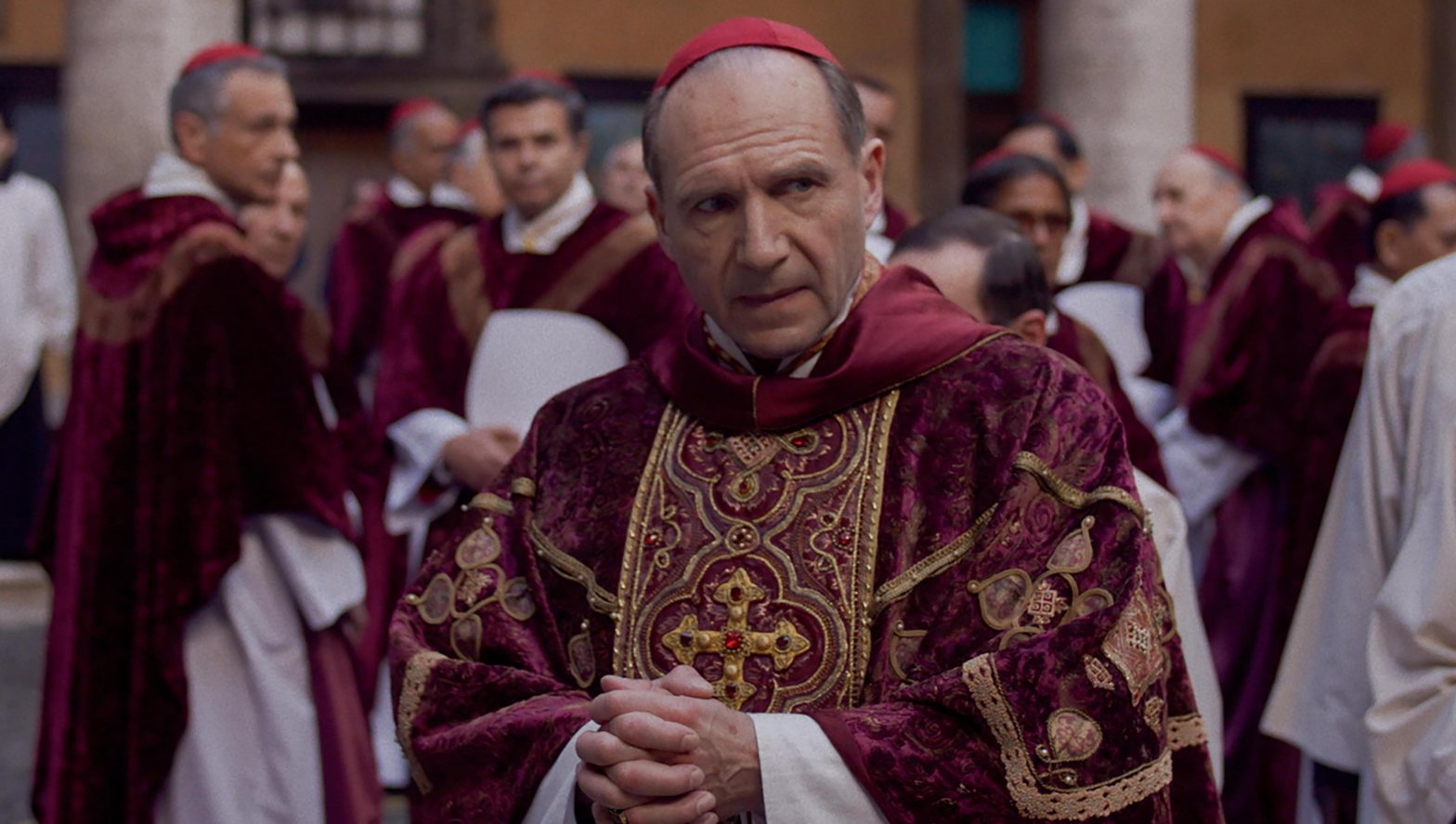
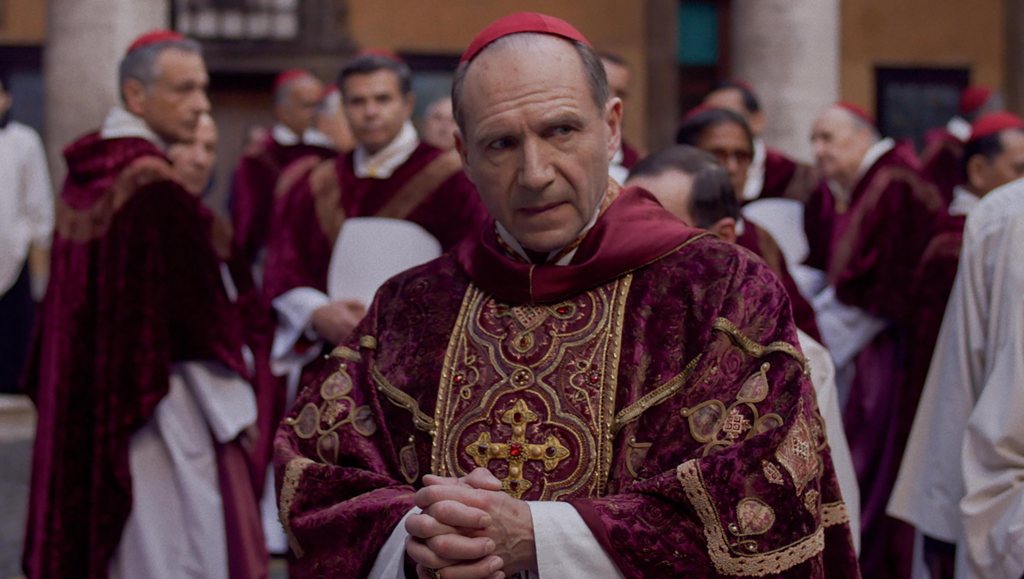
While Edward Berger’s Conclave brings an iconic cast of beloved actors, who deliver superb performances and offers thought-provoking themes, I do not believe it should be prioritized when asked for recommendations on recently released films. It is certainly worth watching, but not as soon as possible.

So often when we think of the depiction of the Catholic Church in media, it is often portrayed as an ancient institution that most of us do not relate to. Whether it is a historic film set at any point in the last two millennia, or the Church is a backdrop for sequences including a ritual (perhaps the baptism scene in The Godfather), or perhaps culture wars are at the heart of the matter, the Church appears to be irrelevant to the viewer.

Or, if the character is along the lines of Mother Teresa, Pope John Paul II, Mother Cabrini, or St. Francis of Assisi, we consider them to be heroes that have achieved a transcendent level of humanity that none of us could imitate. But Conclave reminds us, whether we are practicing Catholics or not, the Church is a human institution, dealing with familiar human matters that any of us will recognize.

One line perfectly encapsulates these themes, which are interwoven throughout the entire film: “We are mortal men. We serve an ideal. We cannot always be ideal.”

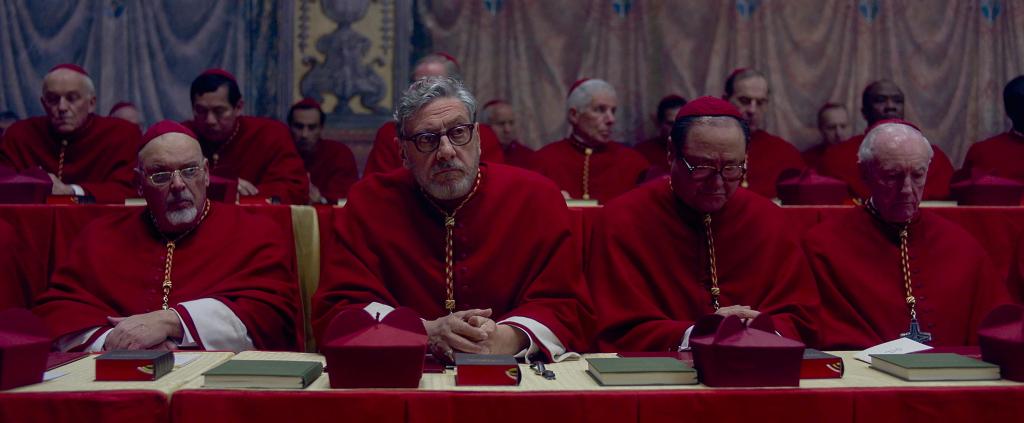
Ralph Fiennes leads the star-studded cast (which also includes John Lithgow, Stanley Tucci, Lucian Msamati, and Isabella Rossellini) as Cardinal Thomas Lawrence, Dean of the College of Cardinals, tasked with overseeing the papal conclave after the sudden death of the pope. We witness an ancient tradition taking place in buildings constructed during the Renaissance era but accompanied by contemporary technology (which I considered to be an incredible juxtaposition).

Here we witness the politics within the Church as groups with differing interpretations of pastoral care vie for positions of power, and we see the ugliness that leaders stoop to in order to achieve their goals, despite their positions as spiritual leaders. Lawrence perfectly encapsulates a hero we can relate to. He is a protagonist handed an important task that deals with the one thing he does not want: power.

He reminds me of Pope Benedict XVI, who also held Lawrence’s position when he was Cardinal Joseph Ratzinger, and submitted several letters of resignation from 1981 until he was tasked with overseeing the 2005 conclave. Hoping the new Pope would grant his request to return to Germany for academic purposes, he was ironically chosen to lead. 

I anticipated the film to move in this historic direction but was surprised by the film’s choice for a twist ending. Without revealing any spoilers, it bore relevance to the theme of wrestling with uncertainty, but I cannot help but wonder if there were better options to pursue.

Uncertainty is the overall theme. As we stress over the uncertainty of the future—especially regarding secular matters—the film reminds us that uncertainty is even experienced in an institution that is founded on the hope of the resurrection of the historical Jesus and has spent 2000 years professing dogmas to better understand salvation. Even the most learned scholars and leaders struggle to understand what specifically should be done in this current chapter of history. 

The viewer must contemplate the overall history of the Church as the cardinals squabble about who should take the seat of the successor to St. Peter the Apostle. As the protagonists fret that rigidly dogmatic clerics may end up in charge, they console themselves that, despite the possibility of leadership implementing harmful pastoral care, there have been worse Popes in the past (think of the Borgia Popes during the Renaissance, when the Church was run by the Mafia).

While Conclave certainly had my interest and I consider it a decent movie worth watching, I do not consider it necessary to watch as soon as possible. Perhaps it will be a movie for a rainy day in the future, but it is not a movie that requires a trip to the theater, especially during awards season.

A Complete Unknown

I am generally wary of biopics, as I think they are simply made for Oscar bait. Your team could definitely catch the attention of the Academy of Motion Picture Arts and Sciences if you are seeking to recreate an aesthetic of a bygone era (be it costumes, set design, makeup, music, or even using production technology from any particular era to make it resemble films made in that time). This is on top of your actors working impressions of iconic public figures, hoping it be deemed more worthy of praise than creating a new character for audiences.

However, this is not the case with A Complete Unknown, which tells the story of the rise of music legend Bob Dylan. The first indication that I was enjoying this movie was that I was emotionally invested in the characters right from the start (a lesson I learned from the shortcomings of Gladiator II). 

I never listened to Bob Dylan’s music, simply because I had no interest. But I was aware of his merit and influence on pop culture (after all, he was awarded the Nobel Prize for Literature in 2014). The title is seems appropriate for me, as this movie was the first time I listened to more than one song in one sitting. This was also my introduction to the controversy surrounding Dylan’s controversial choice of using electric music at the 1965 Newport Folk Festival.

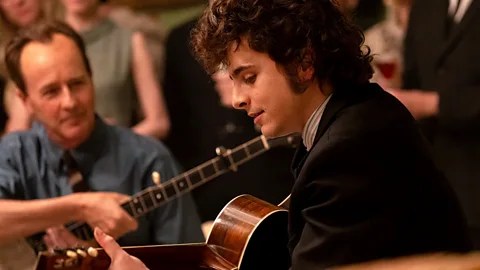
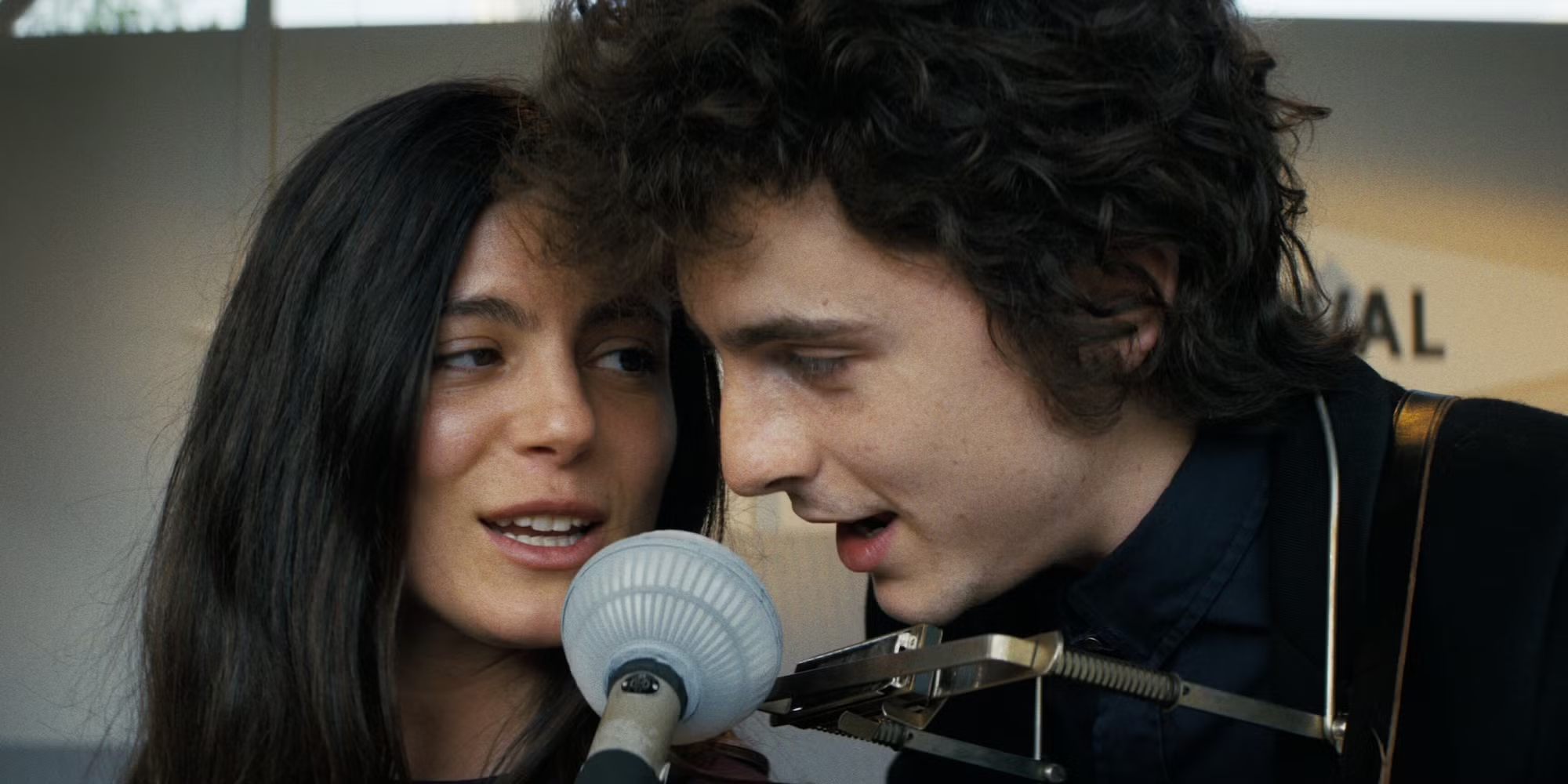
A Complete Unknown covers the rise of Dylan from his arrival in New York City in 1961 to said controversial performance. Dylan is depicted as possessing a genius beyond human capacity, which comes with the cost of social skills. 

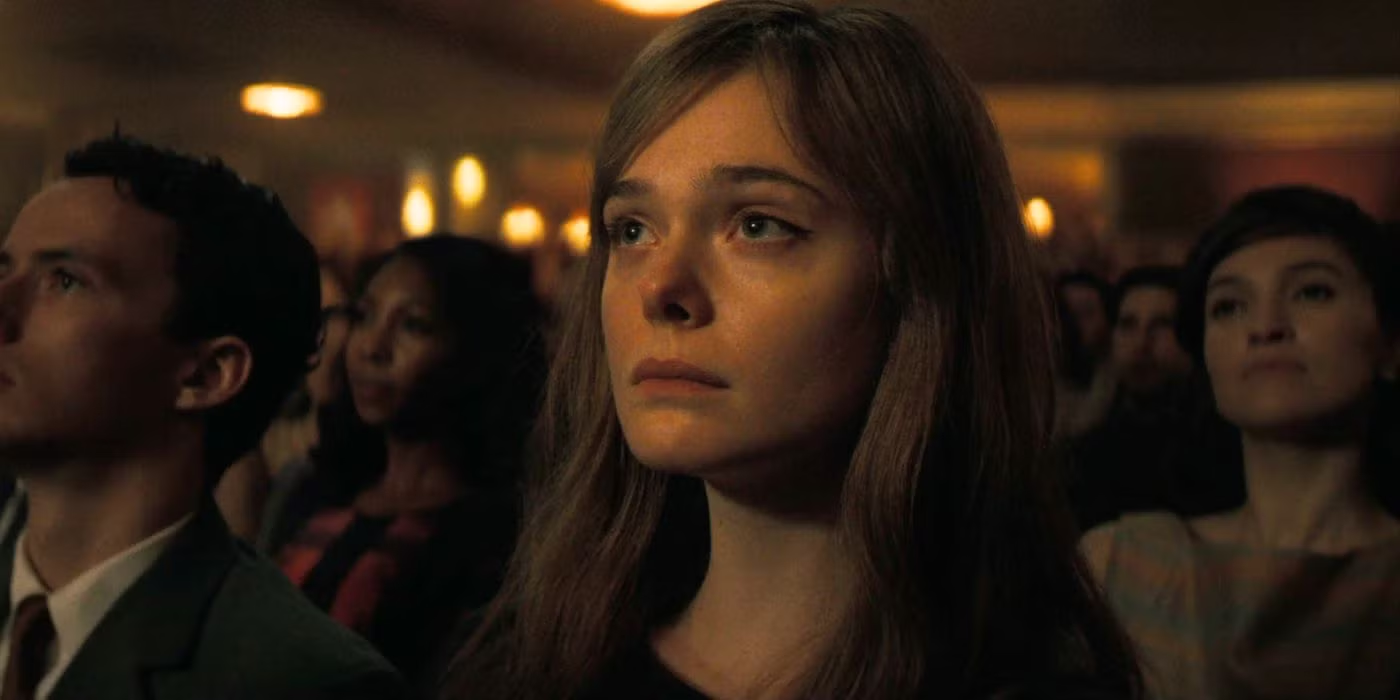
The theme woven throughout this picture is that Dylan is always seeking to be his own authentic self, and is willing to disrespect anyone, friends or business acquaintances alike, in order that he does not become a product of the music industry’s arsenal. Ironically, he will not share details about his background with anybody, even his girlfriend Suze Rotolo (renamed Sylvie Russo, at Dylan’s request, played by Elle Fanning).

While I did not think too much of Chalamet’s delivery of his lines (seems easy to imitate Bob Dylan’s nasal high-pitched voice), my opinion changed when I learned he (and every other actor playing a musician in this movie) sang and played the instruments, himself. Upon learning this, my appreciation for his overall performance increased. It is one thing to imitate a historic figure’s speaking characteristics, but it is another to imitate their singing ability. 

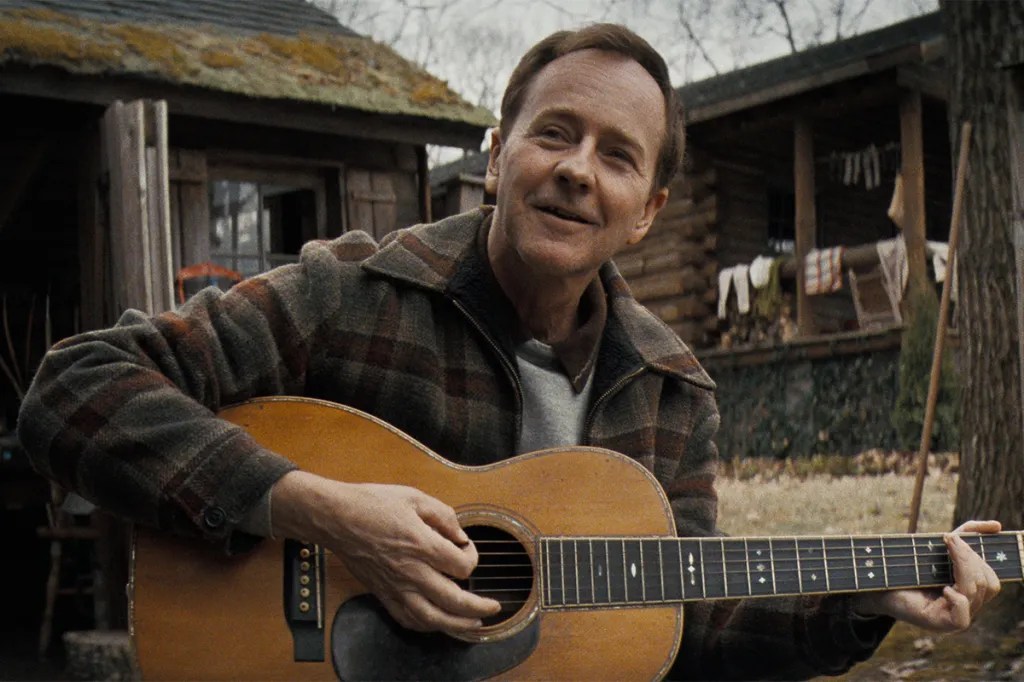
One particular performance that deserves praise is Edward Norton as Pete Seeger, who seemed to carry a wholesome and folksy vibe with him in every scene that put you at peace, even in the midst of a conflict. Norton’s performance, in my opinion, will be referenced in years to come as a metric for creating a character that is impossible to dislike.

We can also appreciate the little details in this movie (Easter Eggs, as we call them), as they reinforce the themes explored throughout its runtime. One I think of in particular is Dylan’s overgrown fingernails. That, alone, adds more depth to his character than extra dialogue, as it tells us that Dylan is non-traditional to his core.

Overall, this is a great movie worth the reader’s time and money. Compared to other movies I have reviewed, I do not consider it essential to screen it in a theater if there is the ability to stream it, as the reader could enjoy it from the comfort of their own living room if they simply wanted to stay in.

But I will reiterate that the best way to experience a movie is always in the theater. If you can, make screening A Complete Unknown an occasion that is worthy of getting out of the house and meeting up with friends. Doing so will give you more of an experience than just watching it at home.

WICKED: Worth Everything

Twenty years ago, the Broadway musical, Wicked, took the world by storm as Idina Menzel and Kristin Chenowith gave audiences the backstory to the witches Elphaba and Glinda of Oz (respectively). While I never saw the play nor indulged in its soundtrack, its existence always seemed to follow me like a shadow that I had no interest in acknowledging. Appreciating showtunes as a teenager was a social death sentence (especially at an all-guys school). But now as a grown man (supposedly), I can cast aside any social anxiety related to acknowledging the merits of a musical, and I can unequivocally endorse Wicked: Part I by saying it is worth every penny for the ticket and must be seen on the big screen.

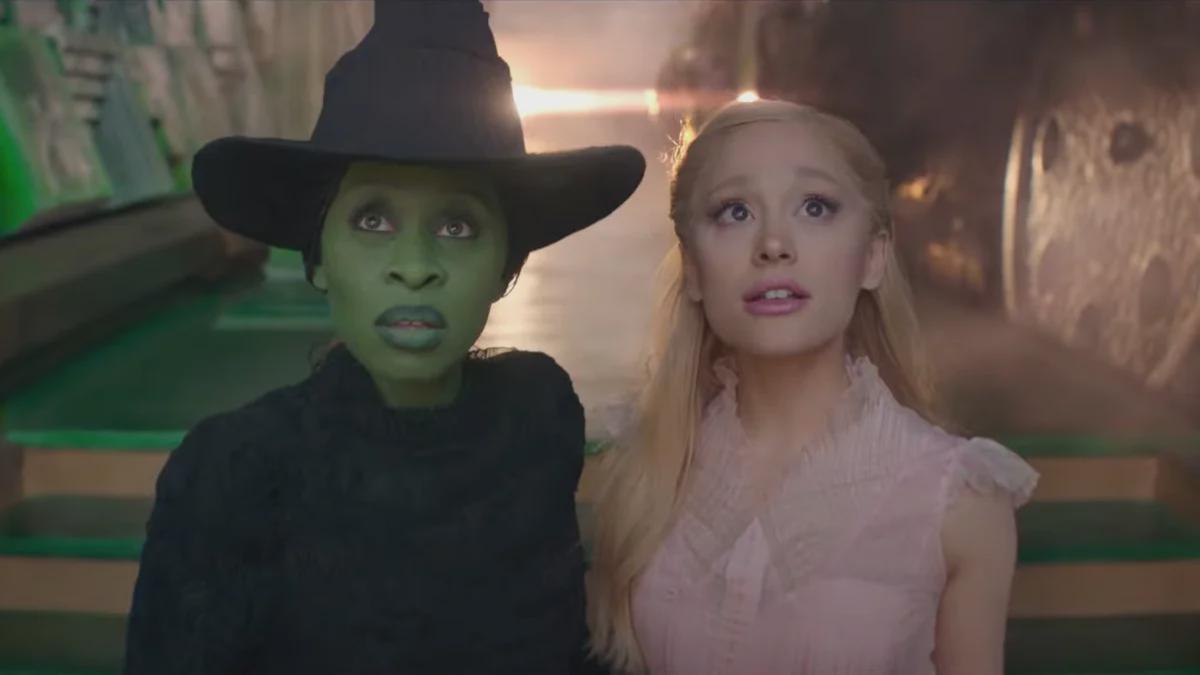
Having never seen the original musical, I cannot be quoted as an authority as to whether this adaptation does justice to its original medium, but I can say that it is worthy of being hailed for its cinematic form. The performances are stellar, no doubt, being led by Cynthia Erivo, as Elphaba, and Arianna Grande, as Glinda. Peppered throughout the cast are legends of the stage, in addition to big names such as Michelle Yeoh, Peter Dinklage, and Jeff Goldblum.

My first area of focus for an adaptation of a musical is the music, of course. I finally heard “Popular” and was able to experience “Defying Gravity”, along with the top-notch sound effects (amplified by surround sound in a movie theater). While your ears are indulged, your eyes will also be excited through exceptional cinematography and special effects. It was worthy of action-movie production value, and they knocked everything out of the park.

Again, if this movie is available for streaming, I suggest the viewer use it as a last resort. Experiencing this on the big screen is a necessity, and it is well worth the trip out of the comfort of one’s home. Removing the possibility of pausing or rewinding forces the audience to fully absorb oneself in the movie and removes the temptations to step away and potentially let it slip away into memory. 

Gladiator 2: Belly Flop

So how often do we think about the Roman Empire? The internet has been abuzz with this topic for the last few years. Normally I dislike engaging in trends, but I realize that I am bound by honor to participate due to one of my tattoo’s being a quote from the Aeneid by Virgil There are many methods to immersing oneself with the legacy of Rome, often through media: books, podcasts, documentaries, television series, and feature films.

And we cannot discuss Rome in film without thinking of one in particular: Gladiator, directed by Ridley Scott; starring Russell Crowe, Joaquin Phoenix, and Richard Harris. It became an instant classic, winning both audiences and critics (it would go on to win the Academy Award for Best Picture, and Crowe would take home Best Leading Actor at the same ceremony). We loved it for many reasons: the Roman aesthetics (accuracy is debatable), the soundtrack (Hans Zimmer), the performances, the action sequences, and above all: the story. Without spoiling the ending, I can say that the story was properly resolved with none of us scratching our heads, wondering if certain sequences made sense.

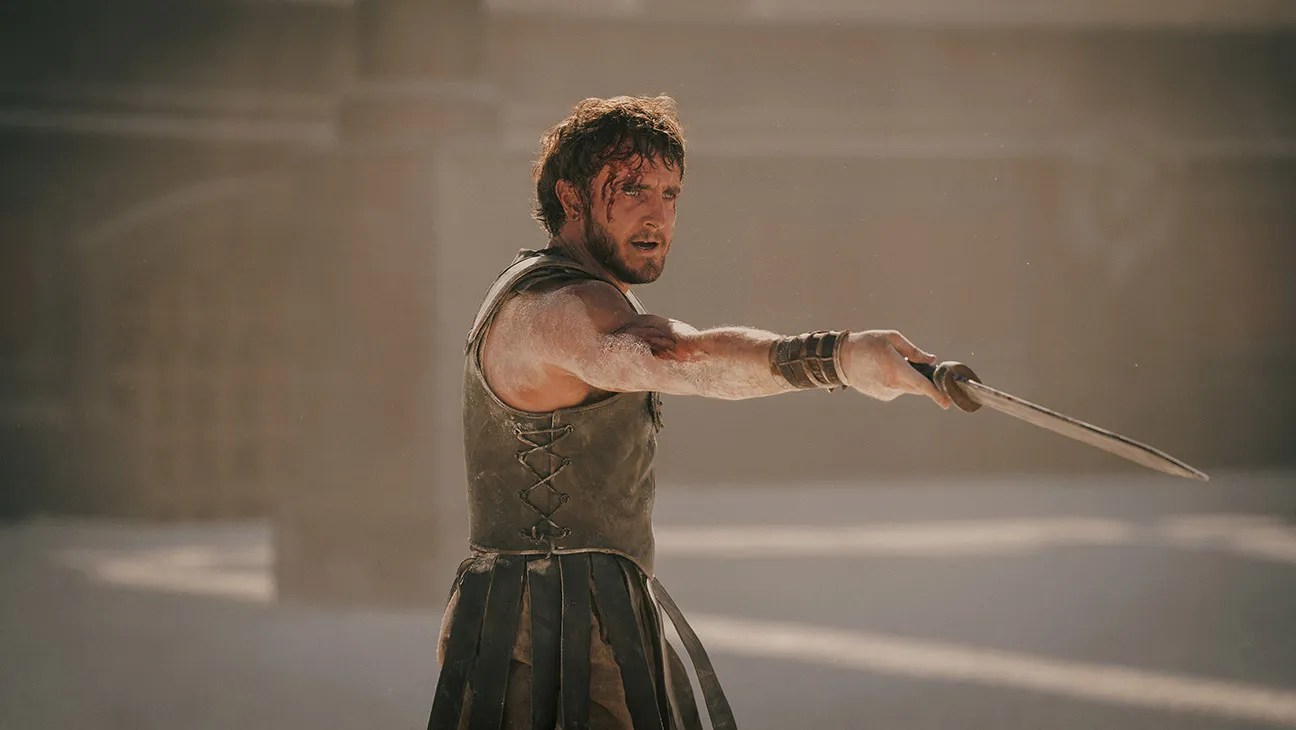
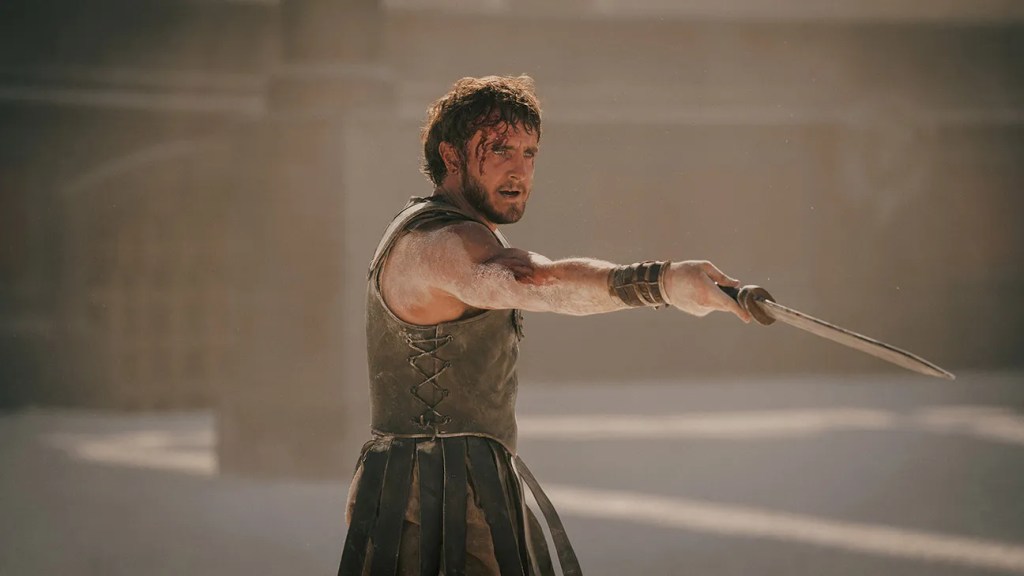
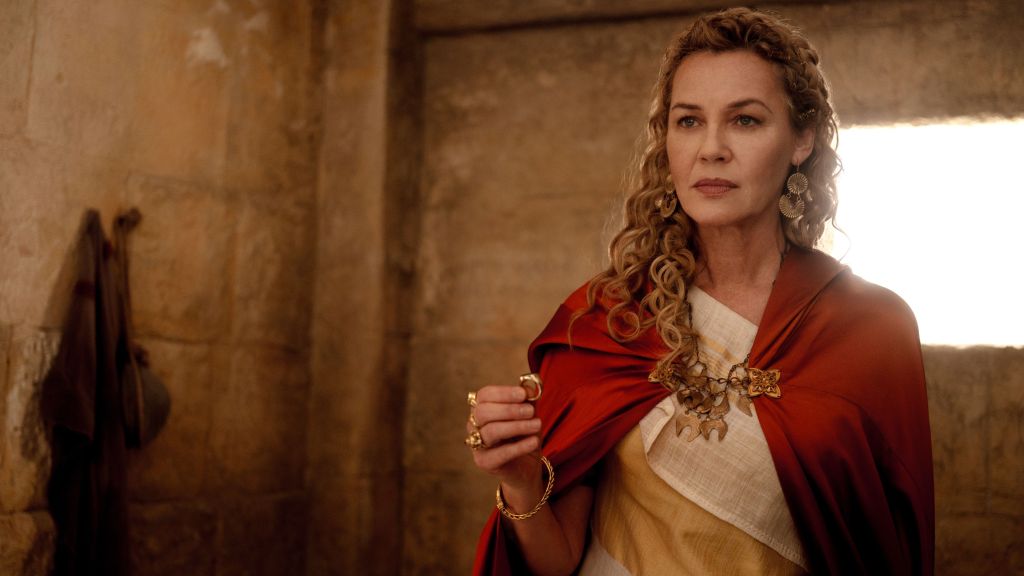
Which is why I went into Gladiator II with apprehension. Unfortunately, my skepticism was justified. Many times throughout the movie, I found myself distracted, looking away from the screen, and checking my watch to see how much longer I would have to commit myself to this movie. From the get-go, I was never emotionally invested in these characters, despite the actors delivering stellar performances. Some of it seemed hackneyed, particularly the depiction of the twin emperors, Geta and Caracalla, as perverse and creepy man-children (and pale gingers, too).

I can say I enjoyed the action sequences, though. If you do not appreciate a well-choreographed stunt, you might be a snob (at least, in my opinion). And, of course, there are Easter Eggs peppered throughout the movie of Roman history and culture that we can appreciate. One scene instantly recalled the legend of Caligula appointing his favorite horse, Incitatus, as consul; and my friend, Virgil, is quoted throughout its runtime. The depiction of naval battles within the Colosseum particularly delighted me, because these actually occurred (I am still in awe of the engineering of an empire that existed two thousand years ago). However, there were certain moments that inhibited my suspension of disbelief and made me mutter “Wait a minute…”

Ultimately, the lack of an enticing story is what keeps me from recommending this to anybody looking to me for a new movie that is worth watching. There were too many similarities to its predecessor. While a sequel ultimately requires some similarities to the original, we do not want to see the story and its themes repeated in almost the same way with a few predictable elements. I first saw Gladiator as a high school senior in 2008 and was excited to read on its Wikipedia page that a sequel was being considered.  But even then, I wondered what the movie would be about, since (without spoiling) Russell Crowe could not possibly return. People speculated that it would follow Lucius, the young boy. But even then, I wondered what he could possibly do that would make could take the original movie even further? Many opinions we had as teenagers age poorly, but after all these years I can say that this is one of the few beliefs that turned out to be true. The sequel does follow Lucius and does not live up to the original.

Maybe the reader will see Gladiator II because they love Rome? Maybe they will see it because they love the actors (Denzel Washington, Paul Mescal, and Pedro Pascal look great on the big screen together). But I do not think readers will see this movie and anxiously recommend it to others. I consider it to be just another sequel made by a studio ultimately knowing lightning will strike twice, but consoling themselves that they at least made money off of it (after all, they got me to pay for a ticket).

The Importance of Cult Classics

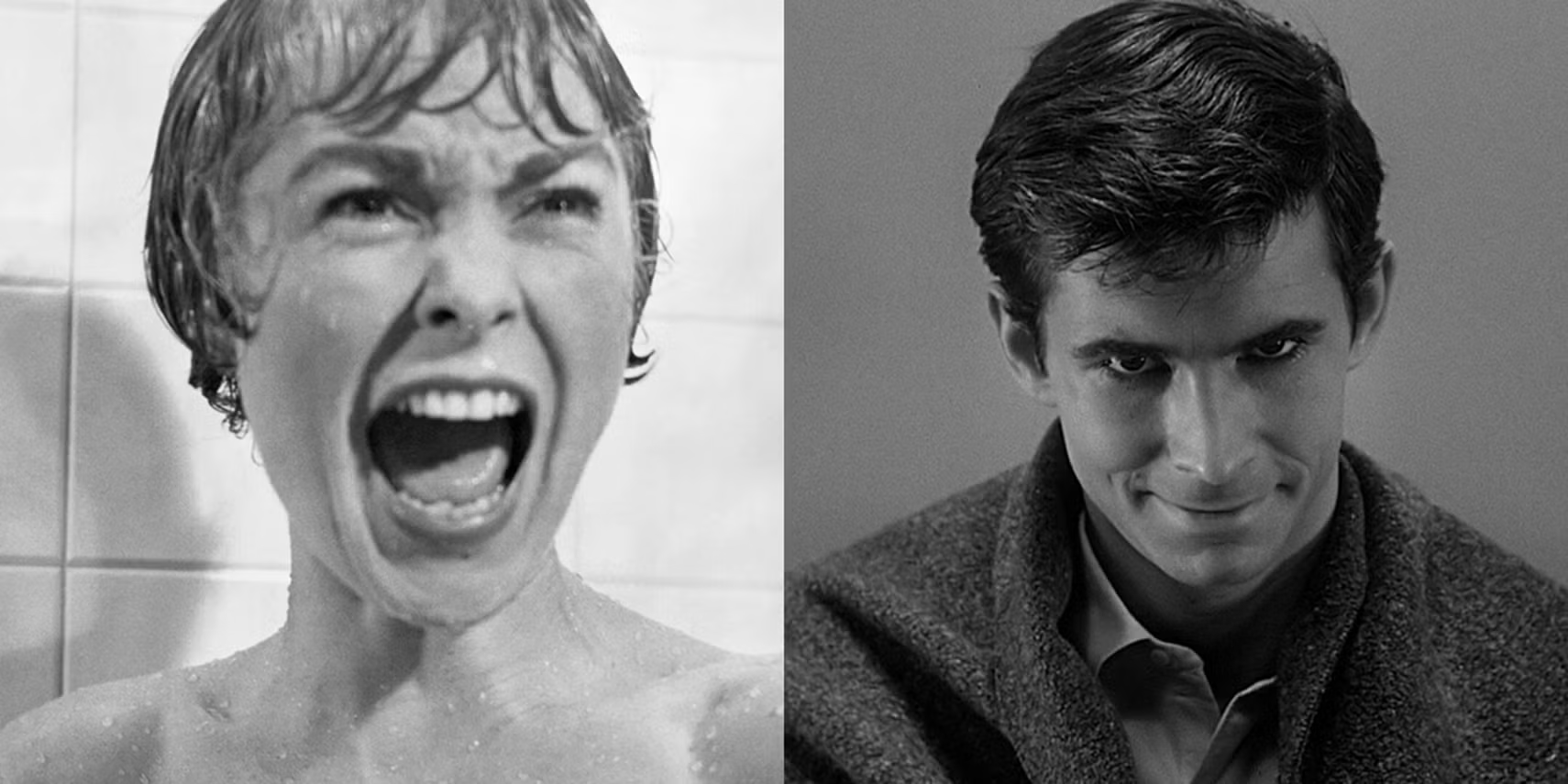
Spooky season is upon us. In addition to decorating the neighborhoods with jack-o-lanterns, cobwebs, and headstones, scary movies are binged by cinephiles like myself. This includes the classics like The ShiningThe ExorcistPsycho, as well as classics from stars of the iconic Universal Monster movies (such as Bela Lugosi and Boris Karloff). Outsiders would expect cinephiles to follow high standards when it comes to watching movies to put us in a festive mood, right?

On the contrary. We welcome all horror films. Not only do we welcome the ones that pushed boundaries and have lingered in our nightmares for decades, but we also even appreciate the ridiculous that leave us questioning how they could have been satisfied with the final product. While we believe that movies should be a shared experience so we can discuss how the filmmakers left an impression on us, we also love trash-talking a movie filled with ham, cheese, and camp (quite the adjectives). If anything, they are so bad that they are good.

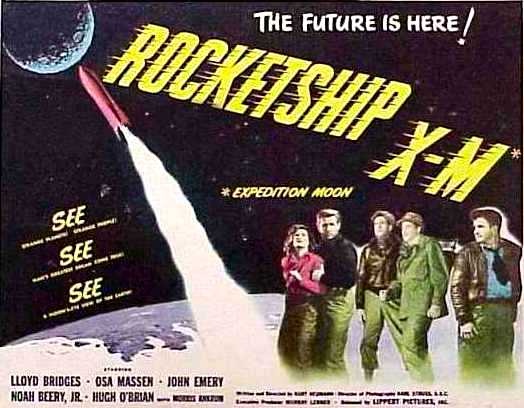
Many months ago, I was catching up with a fellow cinephile, Father Hugh Vincent Dyer (my former chaplain while at Quinnipiac). During our phone call, Father Hugh Vincent shared that one streaming service was offering Ed Wood’s Plan 9 from Outer Space, generally considered one of the worst movies ever made. Inquiring whether I would watch it, I emphatically told him that if I was going to watch a universally panned movie, it would have to be in a social manner because I was not going to waste two hours of my own time subjecting myself such a catastrophe. I needed to be sitting near someone who could mutually roast the movie with me. 

True, there are drama movies that are incredibly bad, but they turn out more cringe-worthy than amusing. I believe it is because we, the audience, know the filmmakers sincerely tried to put out a film they thought would move us, but fell flat on its face. B-movies were cheap experimental productions, which is why they mostly consist of horror and science-fiction. Jack Nicholson appeared in many films by legendary B-movie producer Roger Corman and has always shown appreciation for the opportunities that were afforded him by his collaboration with Corman.

But true appreciation for the bad movies comes when it becomes a shared experience. As soon as something ridiculous happens on-screen (horrible delivery of a horrible line, terrible special effects, nonsensical narrative, etc.), a roasting competition has begun among the audience. And because it is a movie that has been edited and distributed to the masses, there is no mean-spirited affect akin to hecklers of comedians or musicians (well, no direct affect). After all, this hobby led to the creation of the series Mystery Science Theater 3000, in which a terrible movie is played while the silhouettes of science-fiction characters in the foreground heckle this main feature… which I ultimately consider ironic turn of events because B-movies were made to accompany the main feature. Perhaps the only way to for a B-movie to get a turnout is to strive for poor artistic quality?

This practice of eagerly watching bad movies is also part of life as a cinephile. We start off seeking the masterpieces that stimulate our hearts and minds. But we are never satisfied and always seek more films to watch, and inevitably we stumble upon the bad ones. I personally watch the movies to check them off my list, as if I was browsing the catalogue. But they have lived on in throwaway clips that TV shows we grew up on, and by watching the B-movie as adults, we can experience a nostalgic flashback, as well.

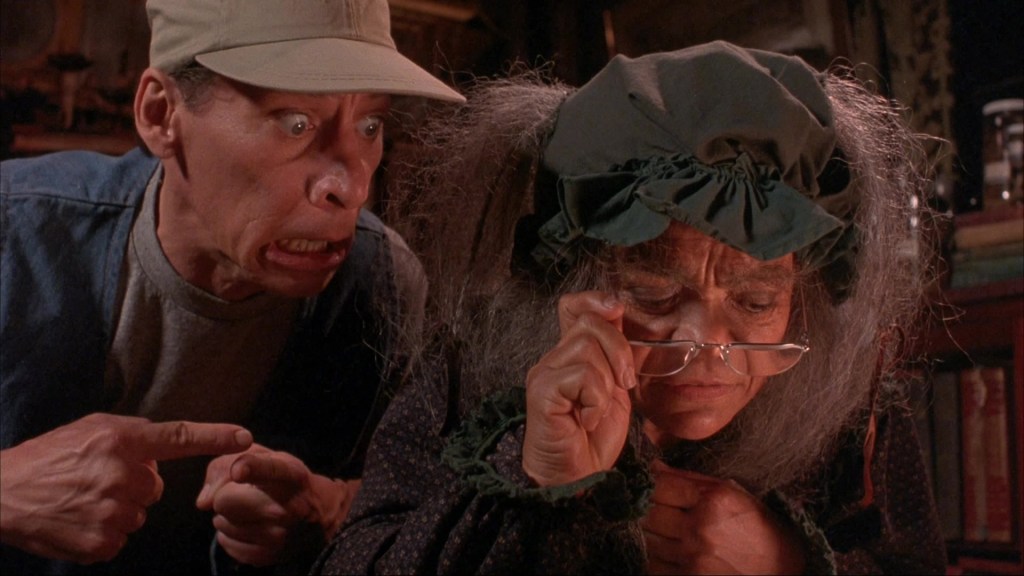
Tonight, I venture into Ernest Scared Stupid, in which Jim Varney’s character awakens a cursed troll that begins terrorizing the town. But in my childhood, the troll freaked me out for turning the kids into wooden dolls. It nauseated me, because a sliver of logic made me realize that if the characters were changed from flesh and blood into a non-animated substance, then they would be dead. Maybe I was thinking a little too much, even for an eight-year-old?

Here’s to all the movies: the good, the bad, and the ugly (no, not the Sergio Leone western, but that is certainly worth writing about later).

A Pivotal Moment in Cinema

Many years ago, I lamented that iconic filmmakers were distributing their newest movies through streaming services. Budgeting is a factor; I will concede that. It is easy to be romantic when you are not considering your resources and budget. I believed that movies were meant to be seen in a communal manner; a shared experience was at its core. To deny that was a gross offense.

But then the pandemic happened.  As a result of social distancing, studios opted to directly stream to the audiences at home via whichever subscription service they did business with. Unfortunately, many movie theaters went out of business, including two that I grew up frequenting.

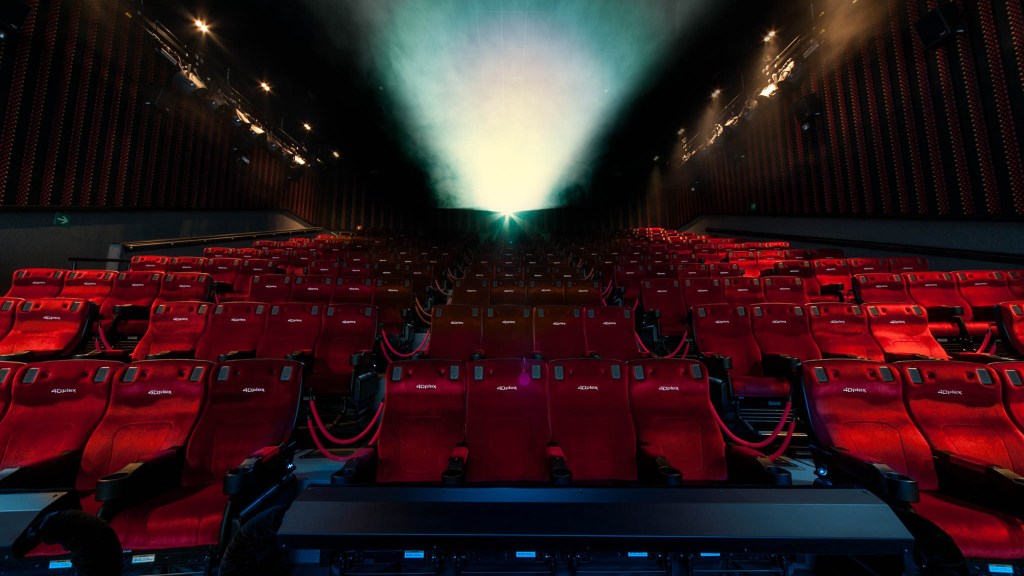
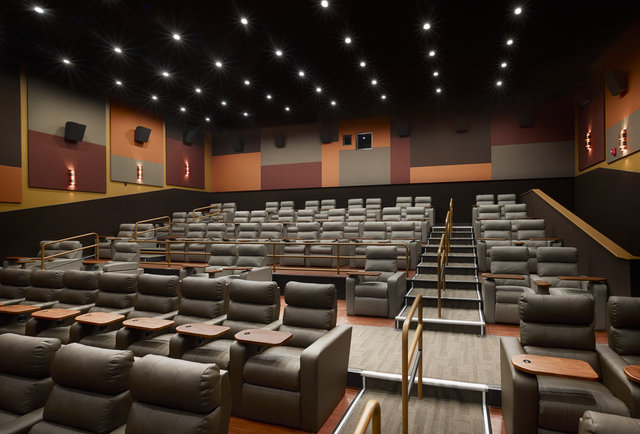
However, one of the theaters has reopened under new ownership. The change is not just the ownership but includes accommodations for luxury seating and concessions serving food and alcoholic beverages. They appear to be following a trend that will probably come to define our current movie-going experiences, and I believe this trend is here to stay. In fact, I believe these changes will be essential for the survival of movie theaters.

The movies are like any other industry: ever evolving. While we have always gone to the movies, there have been groundbreaking changes over the decades involving the ability to stay home instead of going out. It began with the VHS, which led to the creation of video stores such as Blockbuster (and even a Blockbuster Night was an experience that could be shared). In the last decade, our source for watching movies at home morphed from physical media (DVDs) to streaming (Netflix, Hulu, Disney+, etc.).

But what’s wrong with staying in the comfort of your own home and watching at your own convenience without having to worry about traffic and budgeting at the concession stand? And who knows which stranger is going to be sitting near us? While we all engage in self-deprecatory humor about not wanting to socialize (think Elaine Benes remarking “I’ll go if I don’t have to talk”), engaging with others is essential to life. We are not meant to be isolated; this is even evident among animals.

Theater owners know they are at risk of losing their business to an evolved form of media, and like any other industry that is confronting with a new form of competition, they must evolve to match it. Perhaps younger people have now developed a dependency on the instant dopamine hits and will not be able to last two hours focusing on one screen and a single video at a time? If this is the case, then movie theaters cannot expect the future market to be able to sit in a simple screening room to watch a movie when they could easily do it at home with Hulu while scrolling through their preferred apps and pausing to browse their fridge or pantry for a snack. They cannot be enticed with just popcorn and candy; this is a critical moment for the history of movie theaters.

How can we assure their survival? By making going to the movies an experience to look forward to. It needs to become the equivalent of going to a sports game or concert. What is considered “luxury” today should become “standard”. Popcorn and candy are essential, but theaters must provide a dining experience with a menu for food and even alcoholic beverages. Theaters should include smaller screening rooms that can be rented out for private events. Many theaters already offer such services. While I lived in Chestnut Hill, Massachusetts, I frequented the Showcase SuperLux (which is what I miss most about living in said neighborhood).

But for the theaters that cannot indulge in throne seats and culinary accommodations, there are still ways to make the old-fashioned movie-going something to look forward to. This past Labor Day, I ventured to the Coolidge Corner Theatre in Brookline, Massachusetts, to screen Jaws with a friend on 35mm film (our eyes take in lighting better through actual film, compared to pixels), and the movie was preceded by an introduction by “Matt Hooper” (who was actually an employee dressed as Richard Dreyfuss’ character), and a contest for audience members to come forward with scar stories. If luxury cannot be provided, then you must provide your patrons with memories that go beyond the movie and their snacks.

And what about drive-ins? I have never been to a drive-in movie, but it is certainly on my bucket list. And if it is a good time, then I have no problem seeking more out, regardless of potential obstacles.

I do not consider myself an overall expert in the entertainment industry. I do not have access to all the data that indicates which trend the market is following or what could potentially happen down the road. But I know from life that nothing lasts forever, and this even applies to my lifelong love affair with movies. All I can say is that we are living in a new era of entertainment, and we are about to see whether the traditional experience of going to the movies will endure.

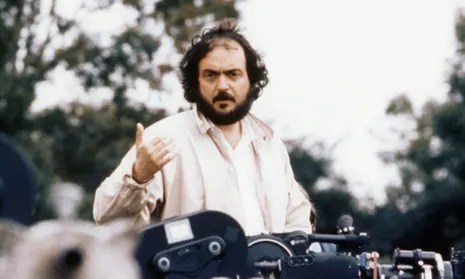
The Happy Endings of Stanley Kubrick

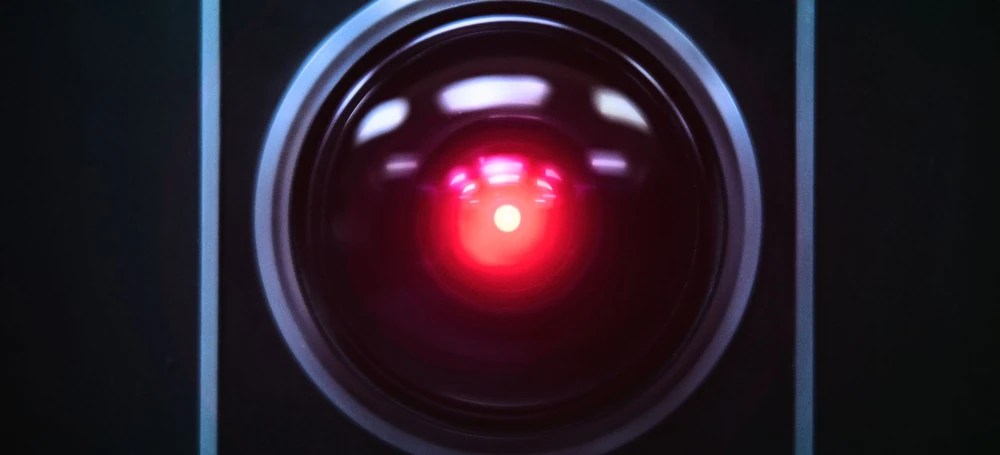
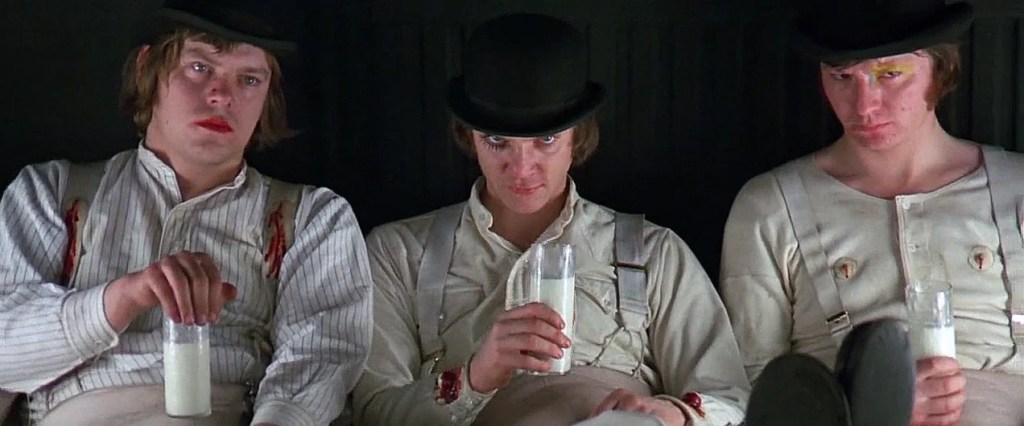
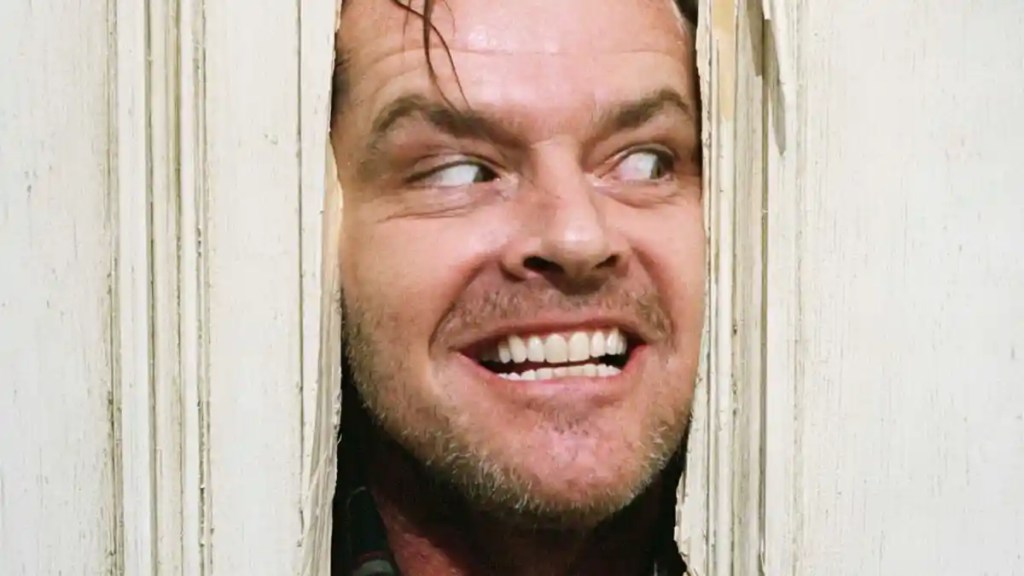
Darkness looms over the filmography of Stanley Kubrick. From the spacecraft run by the murderous artificial intelligence; dystopian London seeking to eradicate ultraviolence; the ruins of Vietnam; the isolated Overlook Hotel; or the War Room of the Pentagon; Kubrick was willing to explore what terrified others and has led many to despair about the future of humanity. It is the human condition to desert our principles in order to survive.

However, it is worth noting that, bleak as his movies may be, they all have some kind of happy ending. It may not be the traditional “and they lived happily ever after” that we seek, as an audience, but there is a form of relief to the conflict the protagonists must resolve.

In Paths of Glory (1954), the French soldiers are able to preserve their humanity, despite being commanded by officers who have given up theirs.

In Dr. Strangelove (1964), a nuclear holocaust breaks out, but the title character reveals that humanity can survive the coming apocalypse by living in mine shafts and repopulating the human race with ten beautiful women for each man (who must be a top government or military official).

In 2001: A Space Odyssey (1968), Dave defeats HAL 9000, the AI of their spacecraft, and travels beyond the known cosmos and transcends into humanity’s next form.

In A Clockwork Orange (1971), after his exposure to the Ludovico Technique leads to an attempted suicide, the government reconditions Alex’s brain from experiencing illness upon hearing Beethoven to erotic arousal.

In The Shining (1980), although Jack becomes fully possessed by the Overlook Hotel and attempts to murder his wife, Wendy, and son, Danny; the latter are able to escape to safety.

In Full Metal Jacket (1987), after killing a young enemy combatant, Joker narrates that, despite being “in a world of shit”, he is no longer afraid.

While it may be easy to believe that Kubrick believed that humanity was bad, I have come to believe that his films are ultimately optimistic, despite his films ending questionably worse-off than when the film began. These endings are a fortunate escape from the horrific experiences that they endured during the narrative. Could we consider these to be examples of Deus Ex? Could Kubrick be pretending to be the God that we all seek to save us from our trials? So often, God is silent, so is Kubrick his own version of God who grants us relief when we most need it?

Or could I simply be overthinking it and see something that simply is not there? But even overthinking is a sign that the filmmaker has left a proper impact on audiences. It does not matter if the hypotheses have no merit. When the audience continues to discuss a movie long after it has been released, the people behind the camera have succeeded.

Inside Out 2: Hope for Sequels

Inside Out 2 is a warranted sequel. So often studios will crank out sequels for business reasons, despite the fact there is either no way to continue a story that has already been resolved; or that the sequel could not live up to the standard set by the original. Thankfully that is not the case, here.

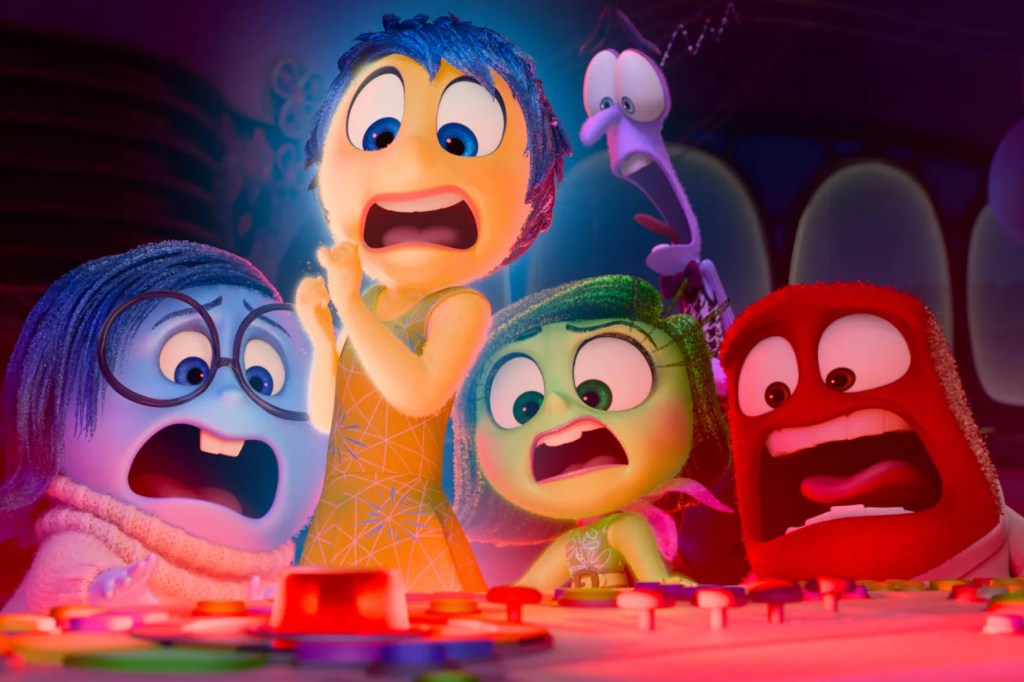
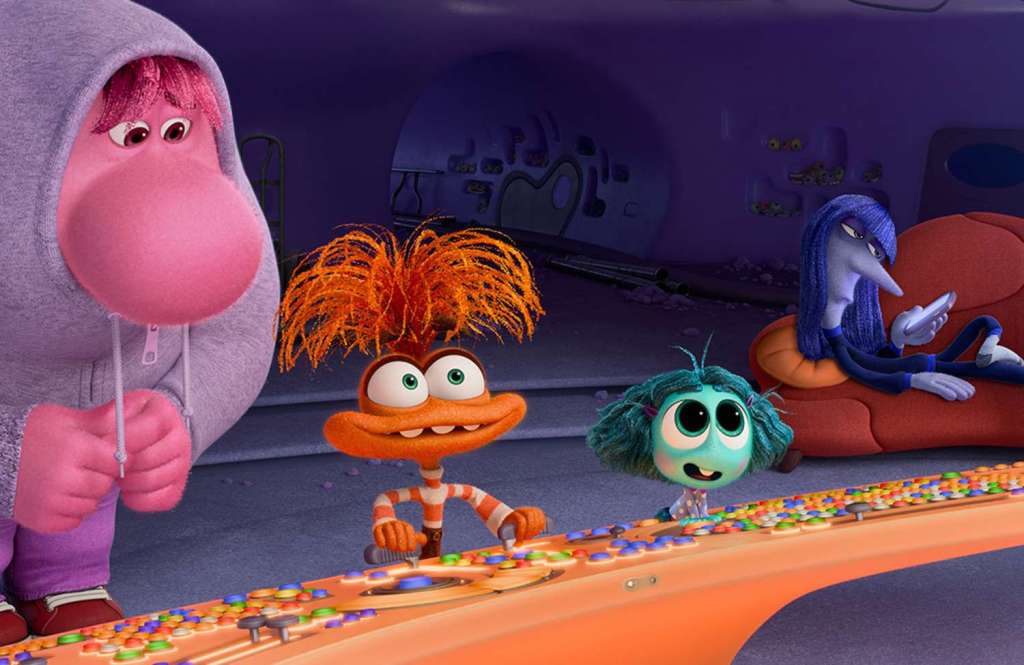
In 2015’s Inside Out, Pixar gave, what I consider, to be one of their most creative and original movies as we saw the inner-thoughts of 11-year-old Riley personified by a committee of five emotions: Joy, Anger, Fear, Disgust, and Sadness (an example of some of the best casting decisions in film history). Two years later, just as Riley is getting used to her five main emotions, puberty begins, accompanied by the arrival of four new emotions: Envy, Embarrassment, and Ennui, all led by Anxiety. While Riley’s emotions dealt with her move across the country in the first movie, the four new emotions take Riley in a different direction as she navigates unfamiliar territory with the social pressures that are a part of the teenage experience (such as self-esteem and ethical dilemmas).

Anxiety guides an ambitious and competitive Riley towards poor decision-making, justifying it all as an attempt to make a good first impression at a hockey camp for talented youth. What makes her a powerful antagonist is that her rationale appears to be sound. While we know better as we watch the movie, our suspension of disbelief believes her ideas to be reasonable (kudos to the writing team for this).

Beyond the overall narrative and performances, I must give credit to Pixar for keeping the creative spark going through metaphors about the subconscious. But what I truly must commend is Pixar’s depiction of mental health in teenagers and how these years are a vulnerable era as teens seek to establish their own identities, experience the popularity contest, and understand right and wrong. While Pixar movies are family-themed movies, I think this installment is incredibly relevant to teenagers (even the ones who are going through the brief aversion of anything from their childhoods to be avoid being lame). I hope it consoles them and lets them know it that they are human, it is okay to not be perfect, and, above all: to love themselves.

I have learned over the years that I should be suspicious over sequels as they are often unnecessary, but Pixar has given me another reason to still hope for them despite the prospects of let downs. Inside Out 2 gave its original characters another opportunity to prove themselves and they nailed it. With the success of this sequel, I believe a third installment is inevitable. I cannot help but wonder how Riley’s subconscious committee would handle young adult life down the road? Who knows? I just hope I don’t jinx it.

Poor Things: R-rated Barbie

When I first watched the coming-of-age teen comedy Superbad in 2008, I was immediately won over to Emma Stone as Jules, the object of Jonah Hill’s affection. As the years passed and she released hit after hit (ZomebielandEasy A, and The Amazing Spider-Man), I knew she would have a successful career as the new “it” comedy girl ranking alongside comediennes such as Gilda Radner, Carol Burnett, and Julia Louis-Dreyfus. I also have had a crush on her ever since. However, I did not anticipate her taking home, not one, but TWO Academy Awards for Best Leading Actress within the next fifteen years.

I expected the Oscar for Best Actress to go to Lily Gladstone for her unforgettable performance in Martin Scorsese’s Killers of the Flower Moon. But when the honor went to Stone, I knew that I would need to screen Poor Things. I just had to see what it was that Stone had over Gladstone.

I was able to find Poor Things available for streaming via my Hulu subscription. While I have often lamented the almost immediate availability to stream recent releases alongside the theatrical release, I must concede I was grateful to have watched this film from the comfort of my own home, where I had the option to turn on subtitles (which can totally change the movie-watching experience) and even rewind to rewatch something I did not immediately understand. Poor Things takes a surreal fantasy approach to science-fiction. Set in Europe during the Victorian era, many liberties have been taken to provide certain technologies to the characters that were not historically available.

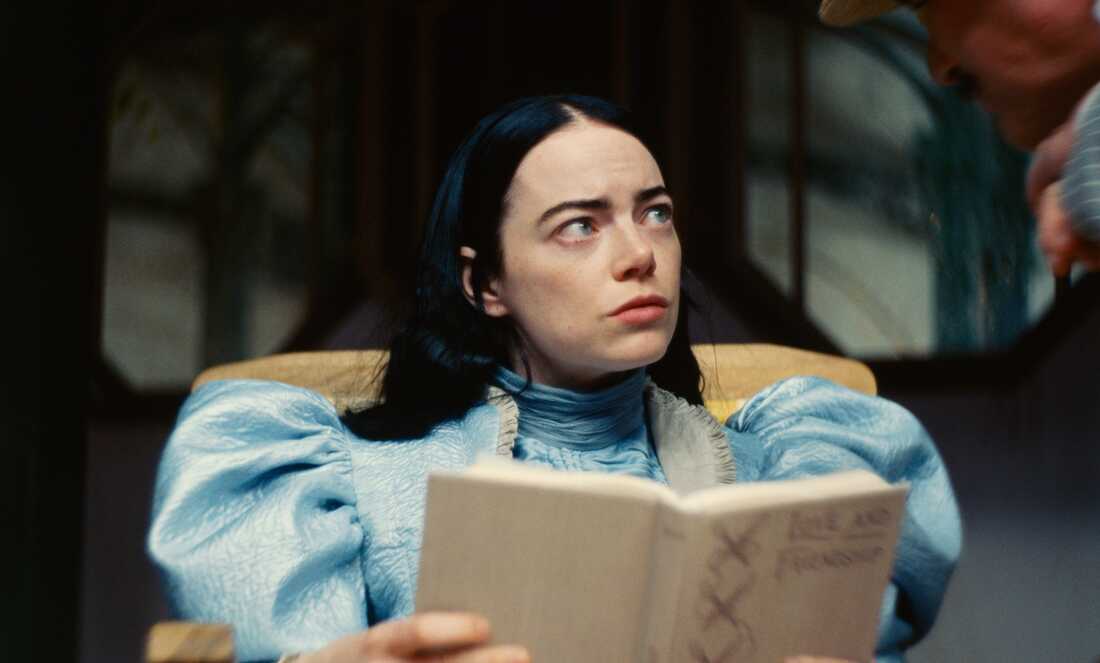
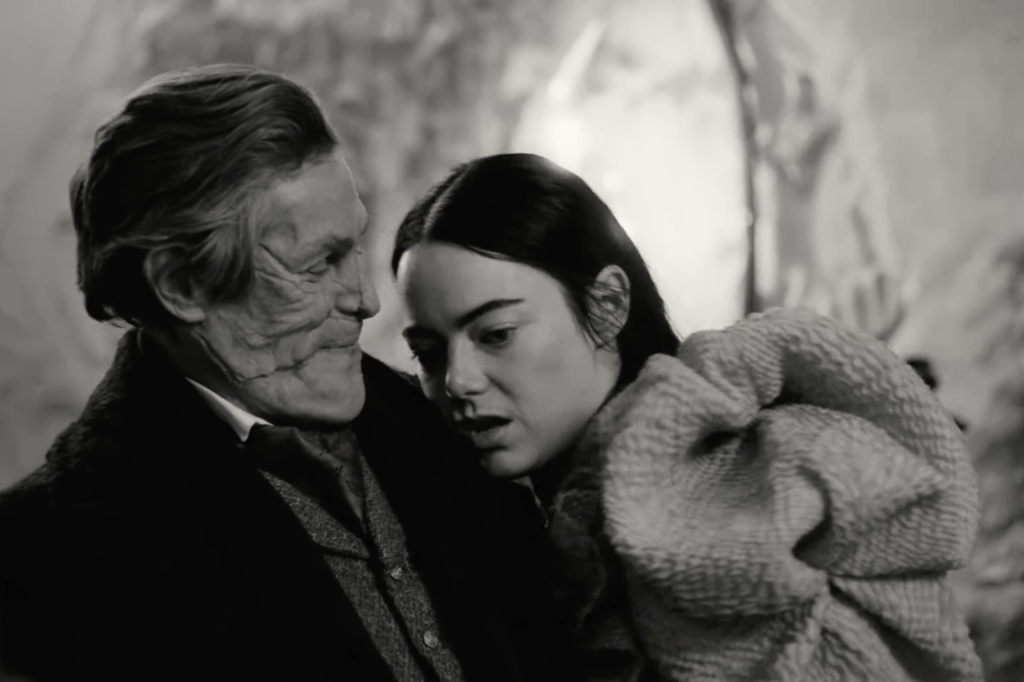
When the eccentric, mutilated surgeon Godwin Baxter (played by Willem Dafoe) discovers the body of a pregnant woman who attempted suicide by jumping from a bridge, he takes an unorthodox approach of transplanting the brain of the unborn baby into the head of the mother, resulting in a Frankenstein-like creation: Bella Baxter, who must experience life for the first time as an infant in a grown woman’s body (especially sexuality) acquiring wisdom as she journeys throughout Europe. Like Barbie, another 2023 film dealing with self-discovery, Bella has come into a strange new world and must face the realities of life and the suffering that is inherent to our existence. However, Bella’s challenging of social mores and taboos is far more graphic and provocative than what Barbie’s family-friendly audience can handle. The surreal narrative is reinforced by the choice of cinematography, which often includes a fish-eye lens and bright and vibrant colors that contrast with each other.

But I must commend the overall arc of the narrative. I have learned over the years that storytelling is much more challenging than previously assumed, particularly when it comes to the resolution. It is quite common for us to finish a movie questioning the relevance of one or more characters, or even the direction the story went. When this movie ended, whatever reservations I initially had about its surreal nature were cast aside in euphoric satisfaction. All details were suddenly relevant and necessary to lead us towards this fulfilling ending.

I must warn all readers of the surreal and sometimes disturbing themes on display, as is usually the case with Yorgos Lanthimos and his filmography. Again, it is the R-rated version of Barbie. While Greta Gerwig and Margot Robbie masterfully tackled existential feminist issues, it was done at a family-friendly level. Poor Things spares no sensitivity and squeamishness. If one wants to learn the truths of life, one must be prepared to face life on all levels, including its ugliness.

When I first watched the coming-of-age teen comedy Superbad in 2008, I was immediately won over to Emma Stone as Jules, the object of Jonah Hill’s affection. As the years passed and she released hit after hit (Zomebieland, Easy A, and The Amazing Spider-Man), I knew she would have a successful career as the new “it” comedy girl ranking alongside comediennes such as Gilda Radner, Carol Burnett, and Julia Louis-Dreyfus. I also have had a crush on her ever since. However, I did not anticipate her taking home, not one, but TWO Academy Awards for Best Leading Actress within the next fifteen years.