New Episode of Moviehouse Mystics: Field of Dreams

The newest episode of Moviehouse Mystics has just launched!

In this episode, Koda and I discuss the iconic 1989 baseball classic Field of Dreams; starring Kevin Costner, Amy Madigan, James Earl Jones, Ray Liotta, Burt Lancaster, and Gaby Hoffman. The links to our platforms are provided below:

YouTube- https://youtu.be/D_1J44WqecM?si=NUkIHNlVQhDMy497

Spotify- https://open.spotify.com/episode/4CMFBFNMXaeGAE93msrHWS?si=1eafc52c9990423b

Apple Podcasts- https://podcasts.apple.com/us/podcast/moviehouse-mystics/id1712034634?i=1000714737353

Don’t forget to like, subscribe, and leave a 5-star review!

Does the Dog Die?

            It is no secret that I am a fan of horror movies. To me, they are the highest form of storytelling. In any story, there must be an obstacle to overcome that conveys a sense of worry or dread in the audience. From the bachelor party searching for the missing groom in The Hangover to Barbie undoing the patriarchy in Barbie Land, there must be a sense of urgency driving the narrative. Horror movies take it to the ultimate level: survival against forces that chill us to the bone. They are clearly not for everyone, and I am among those who get a thrill from these fears, as if it were a roller coaster.

            One of my favorites is The Conjuring, based on the stories of (alleged) paranormal experts Ed and Lorraine Warren. What terrifies me the most is the supernatural antagonists demonstrating their powers against the helpless family. It is almost as if they are teasing the people, reminding them of their transcendence over nature. There is clearly nothing that the people can do to drive out the malicious spirits without divine intervention. Despite these nightmarish qualities, I emerge from each screening giddy and excited to share the experience with other fans of horror.

            But there is only one scene in the movie that I skip. As the family moves into their new home, their dog, Sadie, clearly can sense that something is not right. The dog refuses to come into the house and the family reluctantly lets her sleep outside. When they go to check on her the next morning, they find Sadie dead in the yard.

            Ironically, this is what crosses the line for me. I can attempt to make it through the most terrifying moments of cinema history, but I cannot tolerate watching dogs (or other animals) die.

            In my thirty-four years on this earth, there has never been a period in which I have not had a pet. This includes dogs, cats, and even barn animals. In recent years, I have no longer come to believe pets are a luxury, but a necessity for me. There is something about an animal that can calm my nerves and help me forget my stress for even a few seconds. There have been many days in which the highlight was meeting a friendly dog while I was out and about. There is so much stress that goes into meeting other people. We must be hyper vigilant of our appearances and attitudes, knowing the consequences of a bad first impression. But whenever we meet a domesticated animal, they seem to be saying “You don’t have to impress me, I already like you!”

            Which is why the suffering of an animal hits us even harder. Animals are innocent creatures who cannot harm us like other people can. Sure, an animal can kill a person, but it is not homicide because they ultimately have no will or consciousness. They just live in the moment and try to survive, no matter the consequences. In the end, they are ultimately dependent on us. To me, watching animals suffer is akin to watching children suffer. Stephen King once marveled about the hate mail he received for depicting the death of a dog in his novel The Dead Zone.

            “[I]t doesn’t matter how many people die in books,” King remarked. “…98% of the world’s population gets decimated [in The Stand], but they care about the dogs, man.”[1]

            But it does not need to be limited to horror films. In fact, I have ruled out watching any family-friendly movie that involves a pet as a major character, simply because I do not want to risk the possibility of watching an animal die. When Marley and Me was released near Christmas 2008, I made up my mind right away that I would not see it, regardless of any praise and acclaim it received. Having already read the book and said goodbye to two labradors, there was no way in Hell that I would pay to ugly cry. I cannot even bring myself to watch Lassie Come Home because the title character is even briefly separated from her family, despite the happy ending that involves their reunion.

            I have yet to finish HBO’s The Last of Us, which depicts a post-apocalyptic zombie-infested world. My college roommate marveled that I could not handle this series but would casually watch The Shining and Schindler’s List. My rationale is that these are single-installment movies that are at least two hours long, not an entire TV-series. And we all know how Schindler’s List ends without seeing the movie: the Nazis lose, and their attempted genocide fails. I have no idea what is coming in the next episode of The Last of Us and dread the next episode.

            But if this rationale does not satisfy anyone, then I can quote the American poet Walt Whitman:

            “Do I contradict myself?/Very well then I contradict myself,/ (I am large, I contain multitudes…”

            It is an unusual way of looking at media. But when your dogs have been able to take away your stress and anxiety, you cannot bear to see any dog die. It will always bring up the familiarity of saying goodbye to your best friend for the previous decade.


[1] “How Stephen King Predicted Trump’s Rise Decades Ago.” YouTube, July 13, 2019. https://www.youtube.com/watch?v=UXfklsKGwBU. 

No Question: the Greatest Monologue of All Time

            By October of 1940, the European continent was almost entirely under control of Nazi Germany. During one of the bleakest moments in recorded world history, those in the free world must have murmured their concerns amongst each other. What would come next? What were they do to as a bloodthirsty dictator was expanding his territory? Would war ever reach their home soil? And, most arrogantly, American isolationists asserted this was strictly a territorial conflict. In their eyes, there was no justification to sacrifice our youth on the battlefields of Europe. This was not our fight.

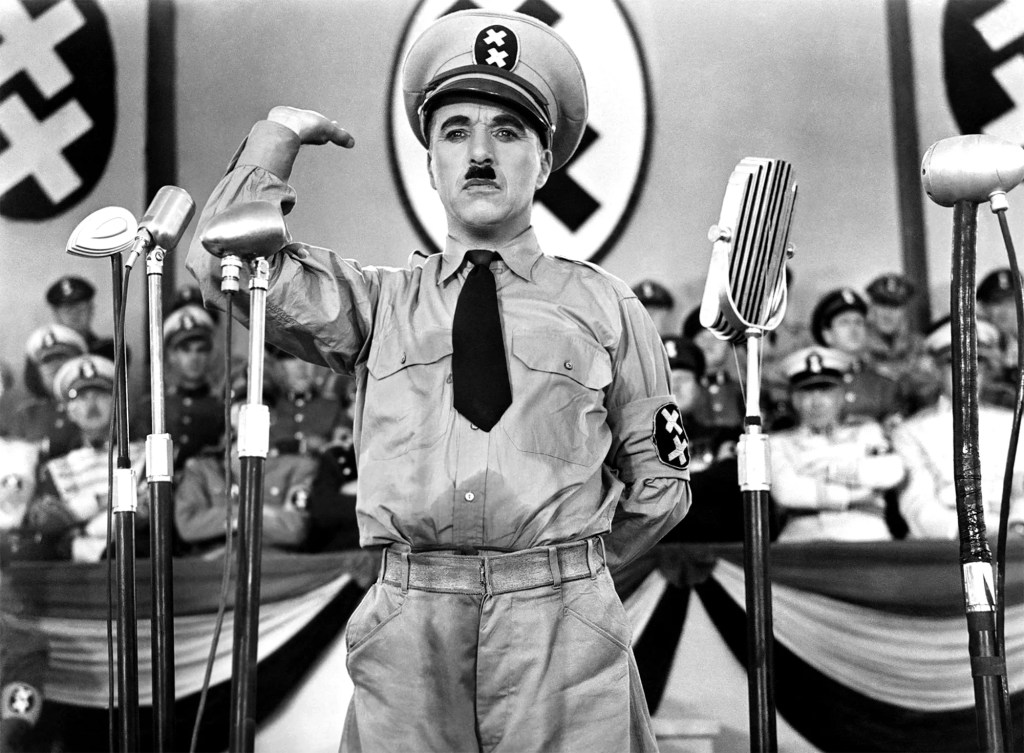
            But iconic comedian Charlie Chaplin decided now was the time to lampoon the Nazis. On October 15, 1940, The Great Dictator premiered in New York City and was an instant hit. American fans and critics were united in their enthusiasm for Chaplin’s satire of Adolf Hitler. Its international reception was divided. Britain had initially promised to ban the film while they were appeasing Hitler. But upon the German invasion of Poland, Britain reversed their promise. The film was welcomed as useful propaganda. Four-and-a-half years after the initial premiere, it was released in liberated France, quickly becoming the most popular movie of the year. In many Latin American countries, whose populations sympathized with Nazi Germany, the movie was flat-out banned.

            But upon the end of the war, Chaplin expressed remorse for creating his lighthearted comedy. Had he known the truth of the Holocaust, he would not have dared to make light of the Nazis.

This was also an important film for the silent movie star. With the release of The Jazz Singer in 1927, sound had finally accompanied motion pictures. Chaplin famously dismissed the “talkies”, certain that the phenomenon would last only another year. In 1936, Chaplin seemed to reverse his opinion by releasing Modern Times, a hybrid movie that is mostly silent with the occasional sound effects or song. Chaplin seemed to get the message that, whether he liked it or not, the talkies were here to stay.

            Chaplin plays Adenoid Hynkel, the rising authoritarian of fictional Tomainia, bent on world domination. Chaplin also plays an absent-minded Jewish barber that coincidentally bears an uncanny resemblance to the dictator. As the Jews in the ghetto are subjected to terrors, he decides to join the resistance to assassinate Hynkel. The Barber and his co-conspirators are ultimately arrested and sent to a concentration camp.

            Escaping the camp, the Barber is mistaken for Hynkel and brought to a rally that intends to initiate the Tomainian invasion of neighboring countries. The crowd expects a speech from the dictator. We can sense his fear as he approaches the microphone, putting himself front and center as his only hope to evade capture.

            Here we are presented with one of the most iconic scenes in the history of cinema. The quiet Barber, with the eyes of the world upon him and an entire military awaiting his orders, finally can speak.

            “I’m sorry,” he begins, “but I don’t want to be an emperor… I don’t want to rule or conquer anyone. I should like to help everyone- if possible- Jew, Gentile, Black man- White. We all want to help one another. Human beings are like that. We want to live by each other’s happiness – not by each other’s misery. We don’t want to hate and despise one another. In this world there is room for everyone. And the good earth is rich and can provide for everyone. The way of life can be free and beautiful, but we have lost the way…

            The Barber gently repudiates the ambitions of Tomainia, lamenting that their technological advancements and materialism have not been able to satisfy their human wants and longings. Reminding the listeners (civilian and military) of their ultimate good origins, he proposes using their power to find true happiness in helping their fellow human beings.

I encourage anybody reading this watch the monologue for themselves (particularly the link that I have provided). While the original monologue contained no musical score, this clip contains Hans Zimmer’s “Time” from the Inceptionsoundtrack. The track is a perfect fit, in my opinion. Starting off gently as the Barber condemns the goals for world dominance, it intensifies as he calls for the soldiers to disobey the orders of their heartless superiors. He then reminds the audience that true happiness is always within reach if they simply help each other. It is all within reach if they are willing.

            “Soldiers,” he cries, “in the name of democracy, let us all unite!”

            To his surprise, the massive crowd erupts in cheers.

            The comedian, who became beloved through silence, left us perhaps the greatest monologue in the history of movies.

            Eighty-five years later, we are watching conflicts unfold oversees and (unfortunately) at home. I find myself frequently listening to this monologue for hope and inspiration in these dark times. Whatever issues may trouble us, it is nothing the world has not seen before. We know that humanity will eventually leave this chapter of history behind, and peace and prosperity will inevitably return. But we still must wrestle with the uncertainty of the present as we seek to navigate through the darkness.

            For those who still believe (and those who are looking for reasons to believe), I bring you The Great Dictator. May this movie serve as a light, however small it may be, to guide you until the dawn of hope finally arrives.

(https://youtu.be/w8HdOHrc3OQ?si=cAmL7zRO4qAfIdvG)

Is This the Dumbest Character in Movie History?

In 1999, Cornell psychologists David Dunning and Justin Kruger authored a study addressing individuals’ learning experience and their levels of confidence along the way. Over one hundred studies found that individuals with the least familiarity with any subject were most likely to overrate their abilities. However, as individuals familiarize themselves with the subject, they reach a point of consciousness that there is much more for them to learn. Their confidence thus drops. Eventually, people can reach a point of expertise in which they cannot understand the struggles of those who are on the beginning of the same path they have taken.

This study mainly addresses the journey of education being guided by humility. But most people familiar with the Dunning-Kruger effect have focused on the more comical aspect of the study. People with the least understanding of any subject are more likely to overestimate their abilities. Driven by illusory superiority, their knowledge gaps prevent them from picking up on their errors, thus accelerating their ignorance. The general impression is that someone we label as “stupid” is stuck in their benightedness.

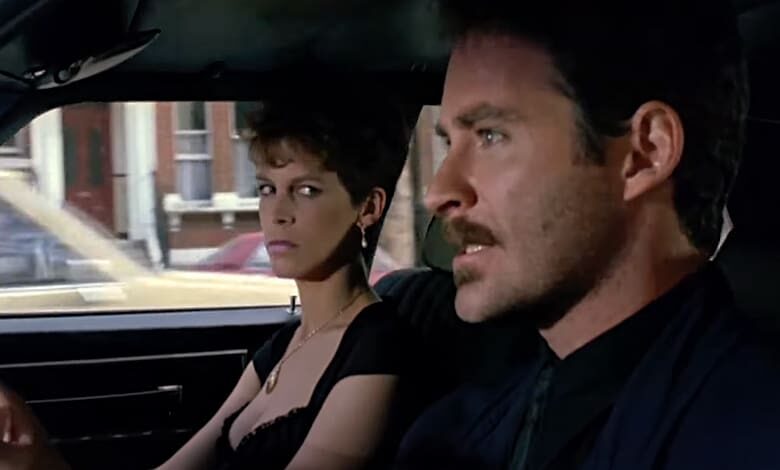
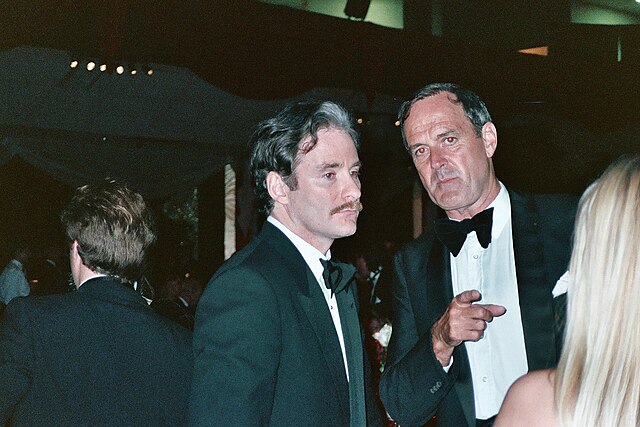
While Dunning and Kruger were the first to publish a comprehensive psychological study about regarding this matter, they were certainly not the first to observe this phenomenon. In 1988, English comedian John Cleese wrote and starred in the heist-comedy, A Fish Called Wanda. Among the characters he created was Otto West, a self-professed intellectual whose foolishness appears unmatched in the history of movies. This is further distinguished by the fact Kevin Kline’s performance as Otto earned him the Academy Award for Best Supporting Actor. This is one of only two comedic performances to receive recognition from the Academy of Motion Picture Arts and Sciences since 1929.

A stupid character is almost a pre-requisite for any comedy. If a comprehensive search of comedy movies excluded anything with unintelligent characters, we would likely be left with few options afterwards. But creating a stupid character is not simply making them resemble neanderthals. There must be a clever way to demonstrate their ignorance. What better material could a writer start with than a fool who asserts that he is an intellectual? Otto particularly prides himself by quoting the German philosopher Friedrich Nietzsche. Unfortunately, anybody familiar with the writings of Nietzsche can point out that Otto is either misquoting or grossly misinterpreting his ideas.

Being a British film, there are only two American characters. It should come as no surprise that the obnoxious and boastful Otto is one of them. After all, it is well-established that the rest of the world tends to stereotype Americans as brash and arrogant. Among the many reasons Cardinal Robert Prevost was elected Pope Leo XIV was that he was considered the “least American of the Americans”. Otto cannot even admit that America lost the Vietnam War, asserting “it was a tie.” But surprisingly, the other American character is the opposite of Otto, almost a counterpart: Wanda.

In her frustration, Wanda corrects several of the falsehoods Otto has pushed, claiming that she has done her research. This implies that Wanda has already reached a point of humility, that it is possible to be wrong. Her rebuke seems to have influenced Otto, who attempts to apologize John Cleese’s character, Archie. However, he cannot even bring himself to say the words “I’m sorry”. At that same moment, Archie is faking a burglary in his home. But Otto is unaware and assumes this is an authentic robbery and proceeds to knock Archie out. When he realizes what he has done, he is briefly able to apologize. But this quickly leads to Otto pushing the blame on Archie, even lecturing him while unconscious.

“How could I know it was you?” he demands as he proceeds to curse him out and kick him.

This sequence is the only time we sympathize with Otto, as he is trying to do the right thing. But in the end, it demonstrates his inability to humble himself. He cannot accept responsibility for his words or actions, pushing the blame on others. For Otto, if he ever says or does something wrong, it is the fault of somebody else. We learn more about his character here than in any other sequence in the movie. Otto is stuck in a case of arrested development, incapable of growth, thus perpetuating his nescience. And he is completely content with this.

In the epilogue, we learn Otto became the Minister of Justice in South Africa.

In characters like Otto, we learn depicting stupidity on screen is a craft. It does not require speaking in drawls, getting hurt, or being unable to think logically. Creating idiots ultimately requires clever situations to express their foolishness. Otto is celebrated for the comprehensive depiction of his obtuseness. Characters like him are a paradox.  Otto is a notable achievement in comedy and ought to be celebrated to inspire future generations of comedians.

Who do you think is the dumbest character in movie and television history? Feel free to share in the comments section! Don’t forget to like, subscribe, and share the City of Cinema with your friends!

New Episode of Moviehouse Mystics: Kubo and the Two Strings

The newest episode of Moviehouse Mystics has just launched!

In this episode, Koda and I discuss the 2016 stop-motion animated classic Kubo and the Two Strings that starred Charlize Theron, Matthew McConaughey, Ralph Fiennes, Rooney Mara, and Art Patkinson. The links to our platforms are provided below:

YouTube- https://www.youtube.com/watch?v=E6BElrxh42U

Apple Podcasts- https://podcasts.apple.com/us/podcast/kubo-and-the-two-strings/id1712034634?i=1000708826112

Spotify- https://open.spotify.com/episode/2kVfd4Zg8xYT60919xoyYm?si=16bf9fb7641d4ec0

Don’t forget to like, subscribe, give a 5-star review, and share with your friends!

Can We Please Have a Hayden Christensen Renaissance?

As I finished my senior year at Xavier High School, I experienced a renaissance: Star Wars. My passion had returned for the adventures that took place a long time ago in that galaxy far, far away. I sought to live according to the unwritten rules of being a teenager, which forbade fandom of sci-fi and fantasy. But as my second semester began, the scales fell from all our eyes. We realized the popularity contest was nonsense. We spent our whole lives longing for the days when we would be top dogs as seniors. Instead we found ourselves casually conversing with those we once considered social lepers.

I was able fully nourish the wonder that came from the space soap operas of George Lucas. And now that I was an adult, I was also able appreciate the intellectual influences of Star Wars. These included anthropologist Joseph Campbell, Eastern spirituality, and the samurai movies of Akira Kurosawa. In addition, I finally understand why critics had hailed the original trilogy and bashed the prequels. Being 8, 11, and 14 when they were released, they were simply my favorites because they were newer. Kids always think what is new is de facto better.

Throughout 2009, I rewatched the movies constantly. I picked up on the merited criticisms, no doubt… But something stuck out to me: Hayden Christensen, the actor who played Anakin Skywalker. I was well-aware that older fans were critical of his performances. but after many re-watches I realized that these criticisms went too far. It all came down to the delivery of his lines. His tone of voice and his intonation were lifeless. But his facial expressions and the physicality of his performance were impressive when Anakin was not speaking.

One day it finally dawned on me: the poor performance was not Hayden Christensen’s fault. It was George Lucas’ writing and directing.

For all the praise I can heap on Lucas, I do have criticisms. I cannot deny that the man was better fit as the creative executive force driving the productions rather than directing. Mark Hamill, Carrie Fisher, and Harrison Ford never hesitated to roast Lucas for his unnatural dialogue. They claim his direction was simply “Faster and more intensity.” Hamill boasts that he can still recall the cheesiest line of his audition to this day. The raw footage of the original movie is quite cringe-worthy. The editing saved the movie (and also won an Academy Award). For the remaining films of the trilogy, opted to hire directors. He chose Irvin Kershner and Richard Marquand to helm The Empire Strikes Back and Return of the Jedi, respectively.

But when Lucas finally got to work on the prequels, he directed all three, himself. The editing room saved A New Hope, and Kirschner and Marquand were able to able to bring produce quality content. Now that Lucas was giving acting advice, the guardrails were down. Any actor, regardless of their potential talent, would be subject to Lucas’ direction.

By 2001, Hayden Christensen, was a rising star in Hollywood. He had appeared in a variety of material, including Canadian youth television (Are You Afraid of the Dark? is among the credits). He received a Golden Globe nomination for acting alongside Kevin Kline in Life as a House. He also portrayed defiled journalist Stephen Glass’ fall in Shattered Glass. He was certainly on the trajectory for a long and respected career. Lucas even compared him to James Dean.

But when Attack of the Clones and Revenge of the Sith were excoriated by the critics, so were Christensen’s performances. While the rest of the cast was also criticized, it was mostly directed towards Christensen. As a result, he appeared to experience the “Yips” and was unable produce better performances after Star Wars. He has mainly kept to independent films since.

But in recent years, Christensen has been shown much love and appreciation. He has always been happy to appear at conventions (on one occasion being brought to cheers in appreciation). He has received love for reprising the role of Anakin for Disney’s canon of Lucasfilm with Obi-Wan Kenobi  and Ahsoka. This exposure has led to appearances on The Tonight Show. Additionally, there have been promotions with WIRED and GQ. These appearances and promotions have accumulated millions of views online. Much to my delight, it appears that Star Wars fans are experiencing a Hayden Christensen renaissance. I am grateful for the stock I bought all the way back in 2009.

The twentieth anniversary of Revenge of the Sith is approaching (May 19). I must ponder: “Why should this renaissance be confined to just Star Wars?” Did he not bring his talent to other movies and shows? Does that mean he can’t contribute to projects that fans of pure entertainment can enjoy? Perhaps he can lead a miniseries, as seems to be the trend now? Why has he not been considered for at least cameo appearances in any upcoming projects by A-list filmmakers? If Lindsey Lohan can experience a second act, then why can’t Hayden Christensen? I believe he still has much to bring to the table. I hope he can read the signs of the times and hear the voice of the people.

New Podcast Episode: THE GODFATHER (1972)

Dear subscribers,

please enjoy the newest episode of Moviehouse Mystics in which Koda Uhl and I discuss The Godfather.

Spotify: https://open.spotify.com/episode/1RuY7bE8tVGpGpbo7REk4r?si=7827950215194856

Apple Podcasts: https://podcasts.apple.com/us/podcast/moviehouse-mystics/id1712034634?i=1000703378222

YouTube: https://youtu.be/dP5876qd8yI?si=K3Jd2FSt3jPdkxcR

Please remember to like, leave a 5-star review, and subscribe… and above all: tell your friends!!!

Oskar Schindler: Enigmatic Hero

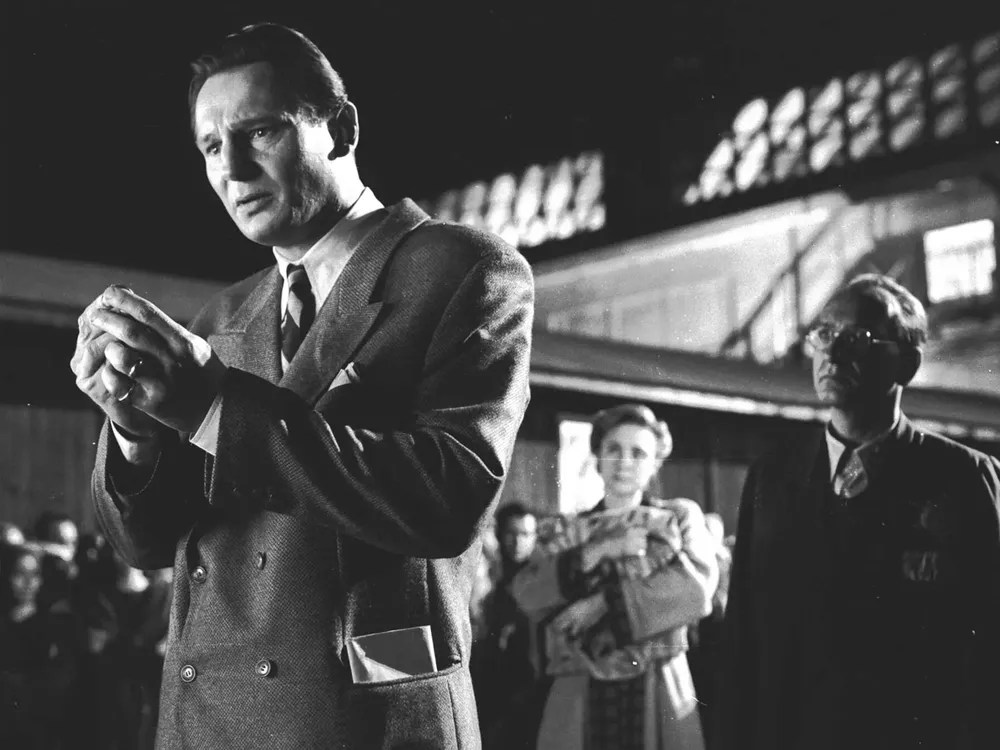
For the last fifteen years of my life as a lover of movies, there is only one character who has haunted my mind. His story is an epic, not in the traditional manner of conquest, but his growth as a human being. Driven first by profit, he eventually squanders his long-desired fortune to save the lives of over a thousand people he was initially apathetic to. This is Oskar Schindler, the hero of Steven Spielberg’s 1993 masterpiece Holocaust drama Schindler’s List, who reminds us that the light shines on in the darkness.

His introduction depicts him making friends with local Nazi leaders just after the invasion of Poland, but this is strictly for the purpose of networking. During his first scene with Itzhak Stern (Ben Kinglsey), a Jewish accountant living in the Kraków Ghetto, Schindler brushes off Stern making his legal disclaimer of informing him that he is Jewish, making it clear that he does not believe in the Nazi master race ideology. Despite his rejection of hate, he is still morally flawed as he pursues his lusts and ambition. Being a good man requires far more than rejecting prejudice, because it is an easy and low bar to clear. There were plenty of other good people who rejected the hate of the Nazis, Spielberg could easily have made a movie about any one of them. So why Oskar Schindler?

Because Schindler’s moral flaws make him more interesting than someone who opposed the Nazis from the get-go, stood their ground, and never looked back.

The transformation makes his character arc far more beautiful. Initially apathetic to the plight of the Jews, his final scene depicts him sobbing as he laments that he was not able to save more from genocide, despite dwindling all his resources. The duration of the movie attempts to explain how he could make such a transformation. It may very well be the case that the historic Schindler does not line up with Spielberg’s depiction of the man. But in the context of the art of cinema, I am obliged to commend Spielberg. Again, this epic is the transformation in which the man learns to listen to his heart when he is surrounded by the clearest depiction of evil in human history.

He is one of the most comprehensive characters in all of movies. Spielberg likened him to Rosebud, the sled owned by Orson Welles’ character in Citizen Kane (spoiler alert), which symbolized his longing for childhood innocence over his career accomplishments. In the end, Spielberg comments, Rosebud was only a sled, but Schindler is infinitely more complicated. He is an enigma. Spielberg said his conversations with those Schindler saved remarked that while he was originally indifferent to their plight, there came a sudden change in which he exhausted himself to save them. Spielberg attempts to explore the inner workings of this mysterious man.

His transformation is not instantaneous. It begins with him witnessing the liquidation of the ghetto while indulging in wealth and lust by horseback riding in the countryside with one of his many mistresses. In the midst of the chaos, he sees a little girl in a red coat (this is a mostly black and white movie) wander the streets as people die all around her, and as Schindler gazes at her, we can tell that his soul has been stirred. However, the very next sequence depicts him venting his anger towards Amon Göth, the Untersturmführer of the Kraków-Płaszów concentration camp, not because he oversaw the murders of thousands of people, but that he took Schindler’s workforce, hurting his business. When the reputation of the humane conditions in his factory spreads, a woman approaches him with the hope of “hiring” her parents to work for him. Minutes after dismissing her in anger, he regains his composure and agrees to her request. Later, he as consoles Helen Hirsch, the maid of Göth, and moves in to kiss her. Aware of his reputation as a womanizer, she recoils; but Schindler assures her that this gesture is not motivated by lust, but compassion.

During his drawn-out transformation, we see glimpses of virtue in him. Most notably, he attempts to convey to the sadistic Göth that his itchy trigger-finger does not represent true power and authority. Rather, it is the ability to show mercy to those who are justly condemned. The words have an impact on him, who, in a sequence of events, attempts to withhold his anticipated rage. Unfortunately, he finds no satisfaction in the pursuit of virtue and reverts to killing people at random.

The most profound moment in this film is its conclusion at the grave of the real Schindler in Jerusalem. The actors walk hand-in-hand with the historic figures they portrayed as they lay stones on the man’s grave. This unique breaking of the fourth wall conveys to the audience that this is not just another movie that was filmed on the backlots of Hollywood. The Holocaust is a reality, and there are many more stories to be told of survival during the darkest era of modern history.

But prior to this sequence, the narrative reveals that after the war concluded, Schindler’s marriage failed, and he never succeeded in business. It is his failures after the war that amplify his heroism. Schindler never gained anything for his efforts. He never experienced the prosperity that he sought when he first arrived in Poland. In a transactional material world, he understood that morality was more important than profit, that any asset he possessed was worth liquidating to save one more person. We ultimately learn that the descendants of the Schindler Jews outnumbered the Jewish population in Poland (at the time the movie was released in 1993).

Schindler’s List is the ideal inspiration for heroism in our real world. It is during the clearest moment of right and wrong in modern history that we can see an example of what is expected of us if we are to encounter evil today. We learn that there is no material possession that can truly be more valuable than human life.

A Need for Inspiration. Now More than Ever.

Anybody familiar with me knows that I have other great interests besides movies. I am a passionate baseball fan, particularly a Red Sox fan (and I am anxious for this season to begin, as commentators cannot stop singing praises about the team’s depth and acquisitions from this offseason). I am also a man of faith and try to pursue a contemplative state of mind whenever I can. And I am also a history fan. One of my go-to podcasts for the last few years has been The Rest is History. When noted American historian David McCullough passed away in 2022, I went through several of his lectures on YouTube, and he was often consoling audiences in 2018 and 2019 about how there never was an easier time and that previous generations have always had their struggles.

But then McCullough brought up another consolation that turned out to be incredibly ironic: asking us to imagine if we had a pandemic like the Spanish Flu in 1918 and seeing that on the news every night.

We all know what happened next.

You do not need to be a news junkie to know that our country (and world) is experiencing unprecedented trials we never could have imagined while we were first learning in school about how a bill becomes a law. We are all on-edge and incredibly overwhelmed by the headline notifications in the Information Age. We do not know what is going to happen next. The insanity grows like a wildfire, difficult to contain. While we cannot simply roll over and decide to disengage from the news, we cannot fully subject ourselves to it. When shit gets real, there will be moments when we will have to heed the words of Indiana Jones as the spirit of the Lord emerged from the Ark of the Covenant: “Keep your eyes shut!”

Movies have always been my escape vessel. There is no other art form like a movie because it is the combination of all other forms of art (theatre, music, animation, etc.) presented before us that is accessible any time or place (particularly in the modern era with phones and streaming services). While during these trying times I will certainly be turning to faith and watching more baseball than people think is possible, they don’t have the broad appeal that can unite everybody. Some people find baseball boring and some people find religion controversial. But almost everybody will be happy to set two hours aside to sit down with friends and watch a classic film or television series.

My main priority will be the feel-good and inspirational genre. I do not think that an artistic masterpiece such as Requiem for a Dream will be compatible as a way to fill time and entertain myself. Maybe I will watch them in discussion of the artistic merits afterwards with my fellow film buffs? But certainly not for my leisure. Now is the time for escape movies, such as the Star Wars franchise. I may be watching the Skywalker saga for the millionth time and know the exact timing of certain sound effects, but I will use it as an opportunity to daydream about becoming a Jedi knight, traveling to other planets, and interacting with droids that possess a little TOO much confidence. Even when The Empire Strikes Back ended bleakly with Luke recovering from his duel with Darth Vader, and Chewie and Lando venturing off to rescue Han Solo, the final minute of the movie leaves you with hope (particularly with John Williams’ soundtrack).

But there are some films that venture into the dark side of humanity that are worth watching nowadays. While Schindler’s List depicts the Holocaust, the largest and most extensively documented genocide in human history, it remains a beautiful movie about the transformation of a man who initially sought to make a profit off slave labor, who ultimately liquidates all of his assets to save every person he can and understanding how precious life is. It is a movie about how during the darkest moments in history, the light still shines and there is still inspiration for us when it seems there is none left.

I will certainly be publishing more pieces with this blog. It is a means to avoid doom-scrolling on my phone or computer and the return to my passion when I will need it the most. I encourage all who are reading this to take the time to think of a movie you cherish and to find the time to sit down and share it with those you love.

New Podcast Episode

Good evening, readers. Tonight, I have the pleasure of sharing links to the newest episode of my podcast, Moviehouse Mystics, which I co-host with Koda Uhl. Every episode involves one of us introducing the other to our favorite movies.

This particular episode covers Koda introducing me to 2018’s Bad Times at the El Royale, starring Jeff Bridges, Chris Hemsworth, Cynthia Erivo, and Jon Hamm.

Here are the links to our streaming platforms:

YouTube- https://youtu.be/_uab2sEuVA4?si=f85I0QN2Y66iBj7p

Spotify- https://open.spotify.com/show/1K8oI3GZS6y5fVtLb3ltZ9?si=851fa9162ff54325

Apple Podcasts- https://podcasts.apple.com/us/podcast/bad-times-at-the-el-royal/id1712034634?i=1000698643974

Stay tuned for our next episode in which I introduce Koda to the grandaddy of them all: The Godfather.